How to get the most out of guitar classes

So the structure is key, and like you mentioned a two way street. You can run yourself in circles for years without it - and through many teachers. It also gives you a good basis of both progress, and whether or not your getting what you need to out of your teacher or whether you are doing your part in the deal. This is coming from retrospection by the way

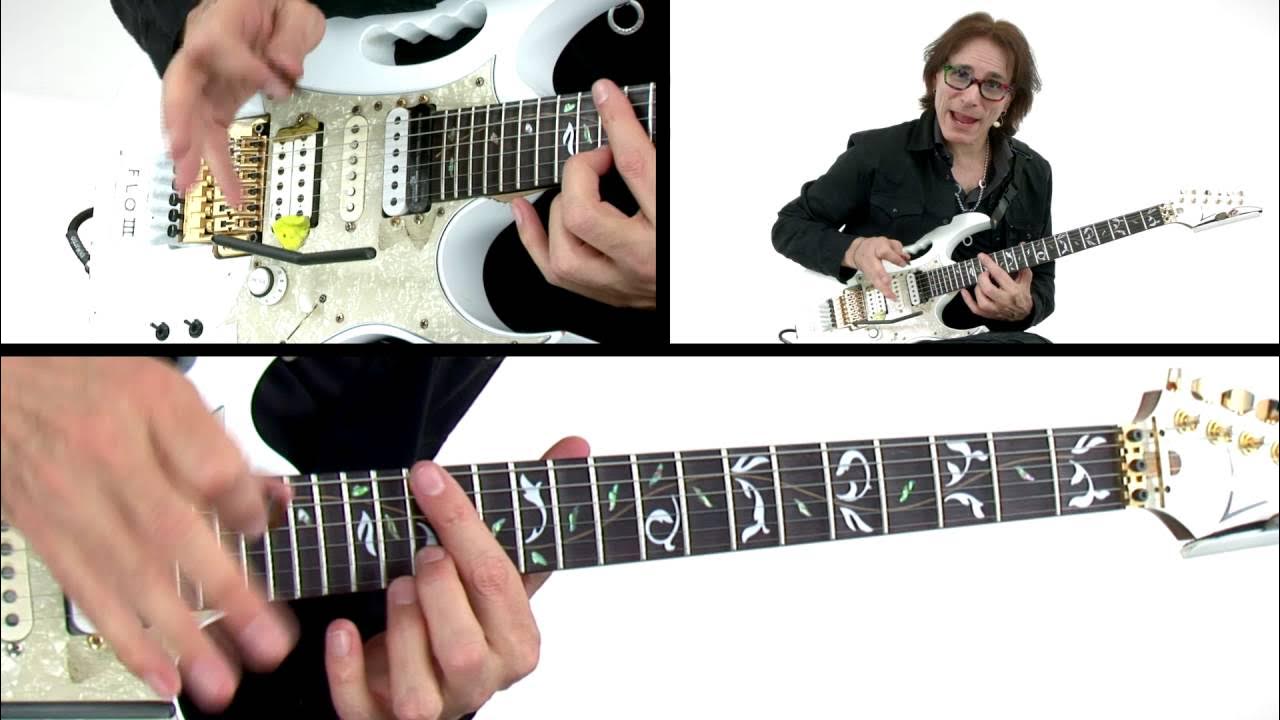
So this is where part of it is personal, and the other learned. Hammering out specific examples in this piece is where I would start. I don’t know specifics, but pick out parts of the song that have the “feeling” or “phrasing” and go into depths with that one part with him. Ask him to play it and then explain the nuances involved and what he does. You mentioned he is a Steve Vai fan. There is a video he did where he broke down for the love of god, and all the nuances involved in his phrasing, I’ll see if I can find it. Approaching it like that, part by part, may be the way to go, and don’t back away from asking specifics. Actually here it is time stamped 8 min 48 seconds, but watch the whole thing, he does say a lot of stuff that really does pertain to your current issues with your teacher.
This takes a LONG time to develop, and can’t always be taught. You just have to write and write and write even if it sounds terrible at first or seems to go no where, or is cheesy or etc. Record every single idea you have - nothing fancy, just use your voice memos app on your phone and title each one. You never know when you might have pieces and ideas that will work together even if they take a while to compile, even years. But this is definitely something that you have to work on, and be okay with the fact that with every one decent thing you will write, you will have a pile of absolute sewage. Don’t be afraid of working with others as well. Post for critique and bounce ideas around, even if you may get negative feedback. Keep in mind also there’s a lot of subjectivity here as well.

Yes. This would be a place where a teacher may be good, or peer feedback from people who you feel exemplify what you are trying to achieve. I think you can find this within any genre player. It’s not necessarily a job for a classical or pop teacher. You can even utilize forums like this for such things as well, but you may get a lot of conflicting advice sometimes if the pool is really big,

Did you discuss these topics with him or does he have no idea that you feel this way? I’m not saying that you should directly share this post but perhaps you should convey the ideas in a way where you have a better use of time?

Hey @kgk !

Thanks for your reply. I have addressed a part of my issue before.

In January I had my guitar exam for semester 1. I was asked to play 1 song where I could showcase my improvisation skills. Improvisation is a requirement for the guitar program.

I picked a funky/jazzy song. I tried to incorperate the correct scales and chord tones on the chord progression, keeping in mind secondary II - V’s, and possibilities for altered scale.

The 2nd examinator, who is not my teacher, critiqued me for a lack of buildup in the solo, and critiqued me for forcefully trying to include altered scale.

I never discussed these (valid) points with my teacher prior to the exam. So after the exam I had the first conversation with my teacher: I know the scales to use, but how do I actually make lines/ phrases? In the next class we worked on a few things, which I really enjoyed, but in the subsequent classes, we already did other things and we got back in the same old habbit.

I want to address these issues again, but I was first going to ask around here first, ask you guys for advice.

For the record: I also need to set my own goals, and share them with the teacher. What makes my education slightly complicated, is that there are things in guitar that I dream of, and there are things that the curriculum requires me to do. With the latter, I’d like the teacher to dive deeper with me.

Once again, thanks for your insights :slight_smile:

It feels that in the end, I’m responsible for my own structure.
Phrasing, the way Steve Vai explains it, I don’t think I need a teacher for this. Just my own critical ears when recording.

I guess what I’m looking for is the “creation” aspect. Whether it’s a complete song, or a harmonically good sounding melody or a single sentence for a solo, or just the complete build up for a solo. Maybe I don’t need a guitar teacher for this, but someone with experience in composing music. I want to break out of playing the same things, but also want to sound cohesive. tAnd of course: users on this forum :slight_smile:

As for the advice on the more expressive part: maybe you’re right the mentor/teacher I’m looking for doesn’t need to have a classical background. But you’re definitely right about that I need someone who exemplifies what I want. Someone with serious knowledge about that :slight_smile:

I had a breakthrough with this sorta thing recently, I would always sound like I was just running up and scales and didn’t know why! Now I craft my licks in groups of 4 notes and attach them together until I have a 16 note phrases and then practice linking them together :grin:

When crafting these licks it is INCREDIBLY important that on your downbeats you are playing the root, 3rd, 5th (and you can get away with the m3 and b7 in bluegrass/rock) and it doesn’t really matter what you play on the off beats (that is the powerful thing about the off beat). In bluegrass I only really ever play the M2 or M6 from the major pentatonic scale or the P4 from the minor pentatonic on the off beat (with occasional exceptions like enclosures).

The cool thing about DBX is that you can adhere to Chris Thile’s pickstroke theory where he only plays downbeats with downstrokes and off beats with upstrokes but you can make this work with single escape as well. When crafting licks in groups of 4 just make sure your 1st note and 3rd notes (on the downbeats) are chord tones and with your 2nd and 4th notes (on the off beats) you have a lot more freedom with (any other note from or not from the scale e.g. b2, M2, P4, #4, M6, M7).

Just to reiterate how important this is, displace my licks by one beat and none of them work or sound good anymore!

This is a good video to watch (though he doesn’t specify as strongly about chord tones and focuses more on scales):

Cliches based around triads are another great way to come up with licks:

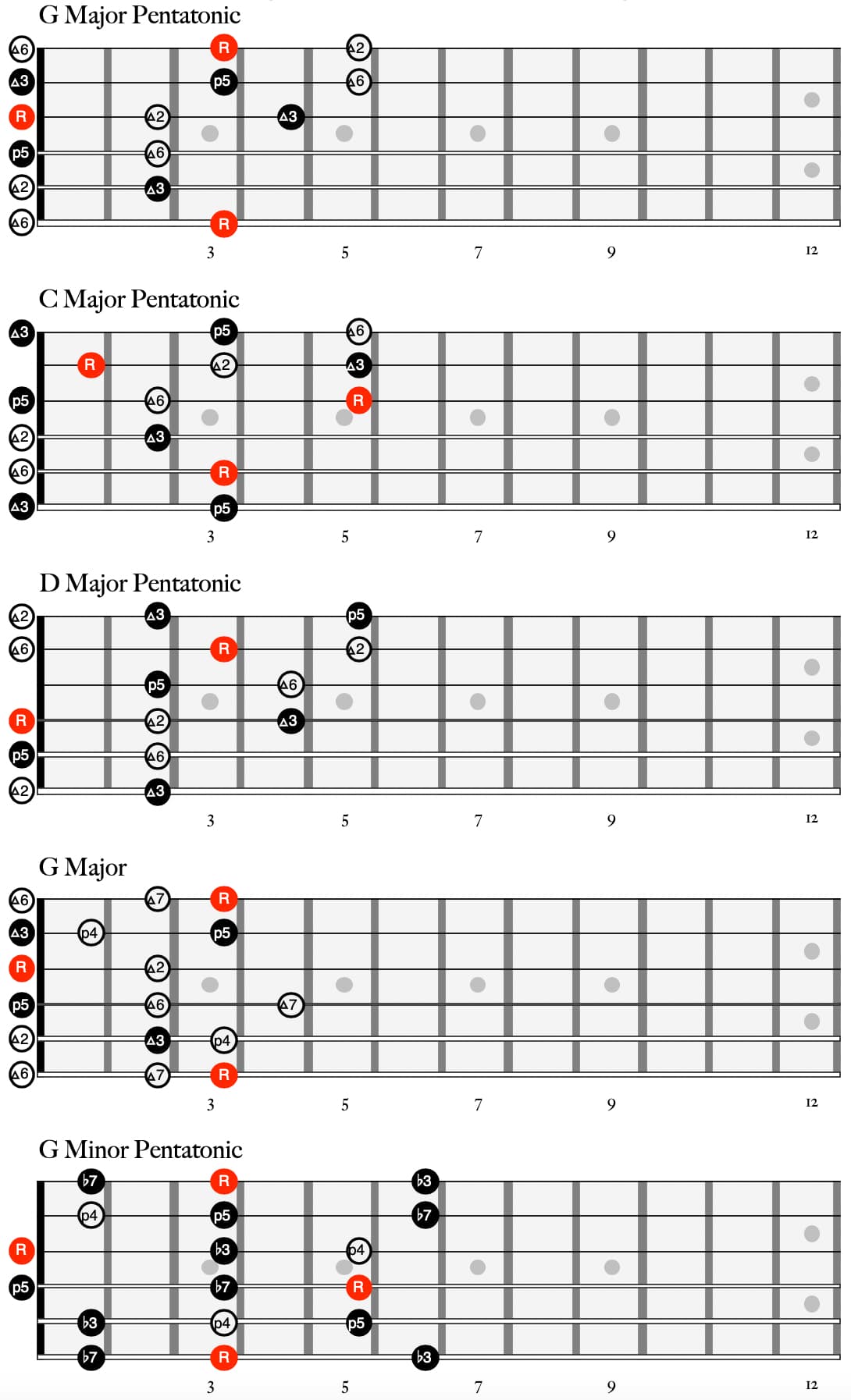
I created these diagrams for myself and I tend to sit in front of them while I come up with new licks, avoiding the white circles on downbeats (you can also use the m3 and b7 as escape hatches when in an awkward spot). Hopefully this isn’t all obvious and can actually be helpful to you!

…and influences. Keep in mind what you are after can sometimes take a long, long time, and it’s something that sometimes can’t really be taught. You find it.

Again, this is something that does take time, is frustrating, and may come with a lot of failures at first - or what may seem like them. The trick is to not give up. Never be afraid to broaden the scope a bit. You can take influence from wherever you want. There are no rules here. If you like the way it sounds, copy it!

Exactly, whether it’s a peer or teacher. Seek people out that align with what you are looking to achieve.

1 Like

Hey @Jacklr

Thanks a lot!

I’ve seen some videos of Marcel before, working on the Bluegrass tags. Very motivating stuff, and I’m looking forward to practice this. Thanks a lot for your explanation on what notes to use on down- and offbeats. It seems like some easy to follow rules, but with a lot of freedom to play and make “mistakes”. Also thank you for mentioning Chris Thile, I will look into his theory.

The last year I’ve spent way less time on bluegrass than I wished. My education asked me to think broader than bluegrass. Fair point, but I haven’t enjoyed playing guitar as much as I could have, looking at these videos.

What do you mean with “my licks”?

Definitely! These are just general rules to follow but if you are having trouble sounding musical and making phrases it might be why!

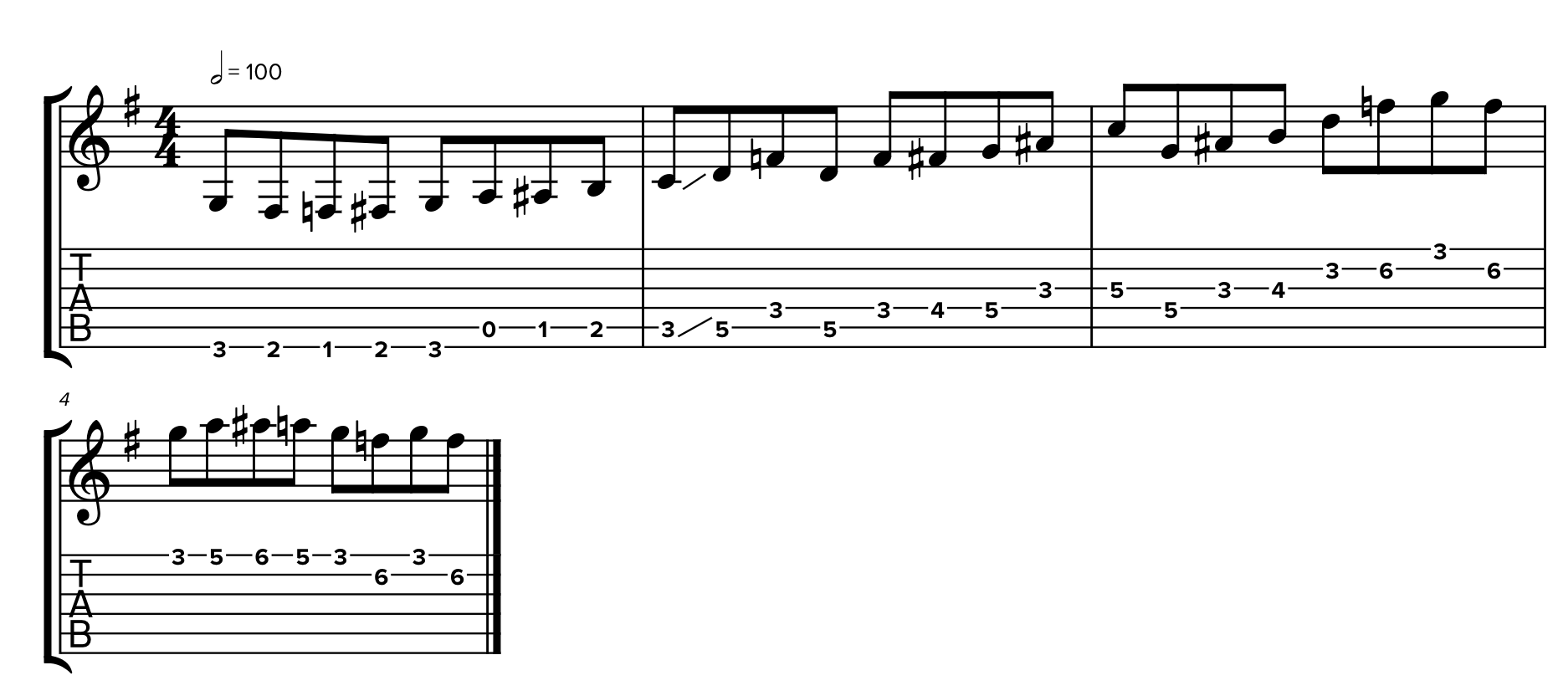
Just phrases that I’ve come up with that I like the sound of and kept, I’m slowly amassing lots and sticking them together and making variations in different ways. This would be a simple example of a G minor pentatonic lick with some chromatic cliches and an enclosure that largely follows the rules. I do use the P4 twice on the downbeat but one of them is an enclosure:

If you can start thinking about intervals in these ways when making your own licks then you should start to come up with stuff you think is cool :grin:

Ah, cool! Will try it out in a bit.

For the record, is this a G minor pentatonic running over a G major, or a G minor chord? Or what’s the chord progression there?

I would play this over a G major. The m3 works because it sounds bluesy and we as listeners accept that sound for some reason. A lot of the time I will play the m3 followed by the M3 which is often a great method of disguising the transition back and forth between major pentatonic and minor pentatonic :slight_smile:

If there was a chord progression in the key of G that changed to C and D I wouldn’t play this lick over the C and D. Instead I would switch to a lick built from the C major pentatonic over the C (with it’s corresponding m3’s, b7s and chromatic cliches) and D major pentatonic over the D (with it’s corresponding m3’s, b7s and chromatic cliches) as the major pentatonic is kinda boring by design (none of the notes are a half step from a chord tone which means none of them feel tense and like they want to resolve which is kinda bland).

You can use it over either, because it contains pretty much well everything, you would just have to arrange or rearrange the phrasing of it - note duration, rhythm etc. to make the chromatics passing tones for either.

We accept it, particularly in a basic blues context for a couple of reasons. One is: If you are playing this over a basic shuffle, the chord qualities underneath are usually made somewhat ambiguous. If you are using in many cases a vamp that is omitting the third and emphasizing the 5th M6th, and min7th like your old school shuffle. This means that the 3rd degree chromaticism doesn’t clash with anything if they are used interchangeably because there is nothing really to clash with. And (this will relate to the next part below) also means that both the plain boring major pentatonic, and minor pentatonic can be used interchangeably because of the absence of those half step intervals you mentioned. These vamps also explain why when blues players often opt to use basic modal coloring it is often both the Mixo and Dorian modes that work best over these because their second tetra chord is common to each other and what is exactly outlined in the vamp.

We accept it also as a brief chromatic passing tone (which is pretty much what you are referring to) and in more complex chords in bluesy or jazzy context particularly in a context built on dominant chords, because the #9 can be an available tension on some. This topic can on for a while.

This is pretty much the point of the western pentatonic in general.

1 Like

Don’t you think the major 3rd would clash over a G minor? The only example I can think of is a minor blues and I don’t think it would sound good there?

Genuinely curious as I don’t have much experience applying this all to minor chords yet :slight_smile:

EDIT:
Was just trying it out and I think the first bar doesn’t work because the major 3rd is on the downbeat but I think you could get away with the lick in the third bar because it’s on the off beat.

You would have to rearrange the lick to make either 3rd a passing tone to the corresponding chord quality. As written, it wouldn’t work.

1 Like

Maybe a cheaper option would be to consider buying instructionals videos on the specific topics of interest, it’s cheaper than taking consistent lessons and sometimes one purchase can give months of material to study, I find nowadays there’s a lot of material on improv, fretboard vizualitation, applied theory, rhythm guitar in different style and not to even mention the amount of amazing players with instructionals that are showing their licks or how to play their songs and their approaches to soloing to learn some new ideas, to me the danger there is trying to take a lot of stuff at once and not focusing on one stuff and you can even over expend your money since there’s so much interesting stuff to learn. Even guys like Tim Henson are showing his finger picking approaches on the internet or players from legendary bands are releasing their instructionals for the first time showing their apporaches to the guitar and songwriting, I have also seen plenty of books and classical guitar methods that can be of help, or simply videos focused on developing fingerpicking techniques. I would just make sure to invest money wisely where it is the most bang for your buck kind of deal, but maybe it’s another option to consider that doesn’t involve paying weekly lessons to another guitar teacher and kinda deciding what you want to focus on first as opposed to trying to learn or develop a bunch of things at once, which i have found it can get overwhelming because of limited time and resources in general.

1 Like

So: without flooding myself with too much things to learn about guitar, which things would you suggest for learning by myself?

I was now thinking about fretboard knowledge. I’ve explored that before, but I think I can do better.

Does anyone have experiences with this?

I’ve been wanting to learn some of this stuff myself. Jack Gardiner has a course on Fretboard Visualization and also a bundle of that course with an applied theory course for guitar that I’ve been meaning to get my hands on, I know Tom Quayle also has fretboard vizualitation/navigation course.
If anybody has this courses let me know to see if I end up getting them.

I would suggest creating your own licks and playing them all the time until they feel natural. When you get to the point where they are automatically coming out when you pick up a guitar then it’s probably very likely they’ll be coming out when you solo.

Doing this and slowly expanding to new places on the neck over time is a very natural and realistic way of increasing your fretboard knowledge/visualisation. The closer your practice is to making music and the further away from boring exercises, the better :grin:

1 Like

The only danger I would caution with a lick centered only approach is that learning a lick doesn’t often teach you how to use it in context or with other coloration, and often leaves a lot out when it comes to chord based soloing and phrasing. You will know it works but necessarily why or ways to morph it. For example the lick you posted above works over a stagnant G7, and you could use it over any bluesy Dominant 7th with extensions as well, but playing that lick over every dominant chord may not teach you what’s really going on and why, or what to do the switch it up.

In other words in really takes a multi-pronged approach and you have to hit it from all sides.

I understand the danger that you’re describing.

At this moment, I do think I should focus more on creating licks than I did before. I tried some of the exercises that Marcel describes in @Jacklr 's earlier post. I find it so difficult to do something else than walking up and down the scale, maybe skip a note here and there.

But to actually hit chord tones, making use of passing tones, or to actually create a musical sentence, a “musical story”…my goodness, even a 75bpm 1 chord backing track is too fast for me to break out of just playing the scale. I know all triads, etc. I just don’t know it “fast enough” to actually make something with it on the spot.

I’d say the benefit of working on creating licks, is that I have more time to think of something that works, and by creating many of those and rehearsing them, hopefully my muscle memory can kick in during a backing track and help me break out of running up and down the scale.

I have quite some theoretical background and ears to understand when something works or not, and I think I can figure out how to change a lick to make it work on other chords.

The first obstacle is to break out of the habit of running up and down a scale

That is true, you should definitely test your licks out against a backing track to see if they work.

Yeah I don’t practice scales up and down anymore for this reason, you just get good at running up and down scales and that’s it :grin:

Exactly! And slowly you’ll develop variations of your licks so it won’t be so rehearsed! You should be able to cycle between them on the fly.

I was exactly the same when I first started out, I expected to move up and down the scale randomly and hoped it would sound like music and it never did. That’s why I’d take it down to the easiest level and craft your licks 4 notes at a time and practice putting them together. You could create a static G backing track for a while on Strum Machine and try them out and then slowly branch out onto your C and D chords. That’s exactly what I’ve done and my next plan is to play along slowly to bluegrass vocal tunes on Strum Machine and try and make the changes without overly rehearsing them, hoping that eventually I’ll be comfortable enough to do it at high speeds!

Also on the Marcel exercises, I do find the Major Pentatonic harder to make sound interesting, I tend to use lots of the chromatic cliches when playing Major Pentatonic stuff. Minor Pentatonic to me is incredibly easy to come up with cool sounding ideas (probably why everyone loves it), the only avoid note is the P4 but tbh it sounds good a lot of the time as well when mixed with something else. Just remember that in G, the G Minor Pentatonic only really sounds good over the G and you can’t play C Minor Pentatonic over the C or D Minor Pentatonic over the D, it has to be Major Pentatonic, otherwise it will sound weird :slight_smile:

1 Like