# How to learn helper/secondary motion?
**URL:** https://forum.troygrady.com/t/how-to-learn-helper-secondary-motion/68085
**Category:** Playing Technique
**Created:** [July 26, 2023, 3:10pm UTC](https://forum.troygrady.com/t/how-to-learn-helper-secondary-motion/68085 "2023-07-26T15:10:03Z")
**Posts on this page:** 13
**Page:** 1
### Author:  [@User-001](https://forum.troygrady.com/u/User-001)
#### Post date: [July 26, 2023, 3:10pm UTC](https://forum.troygrady.com/t/how-to-learn-helper-secondary-motion/68085/1 "2023-07-26T15:10:03Z")
Is there a way that is effective for learning helper/secondary motions like in Andy Wood’s playing where he is mainly DSX but can switch to USX for a short duration in order to play lines that require DSX and USX?
Thank you!
---
### Author:  [@joebegly](https://forum.troygrady.com/u/joebegly)
#### Post date: [July 26, 2023, 3:20pm UTC](https://forum.troygrady.com/t/how-to-learn-helper-secondary-motion/68085/2 "2023-07-26T15:20:05Z")
I’ve been working on this myself lately. There was recently a thread here where I shared some of my approaches
> [@Odd Numbered String Change](https://forum.troygrady.com/t/odd-numbered-string-change/67836):
>
> DSX Wrist player here. After watching the Escape Motion Series I’ve been trying to find a “secondary” motion that’ll help me hop out for the next string when I’m stuck. I’ve tried using a slight rotation from my forearm (just like EVH tremolo), but doesn’t work. Can someone share what actually worked for you? Can’t see my way out of this
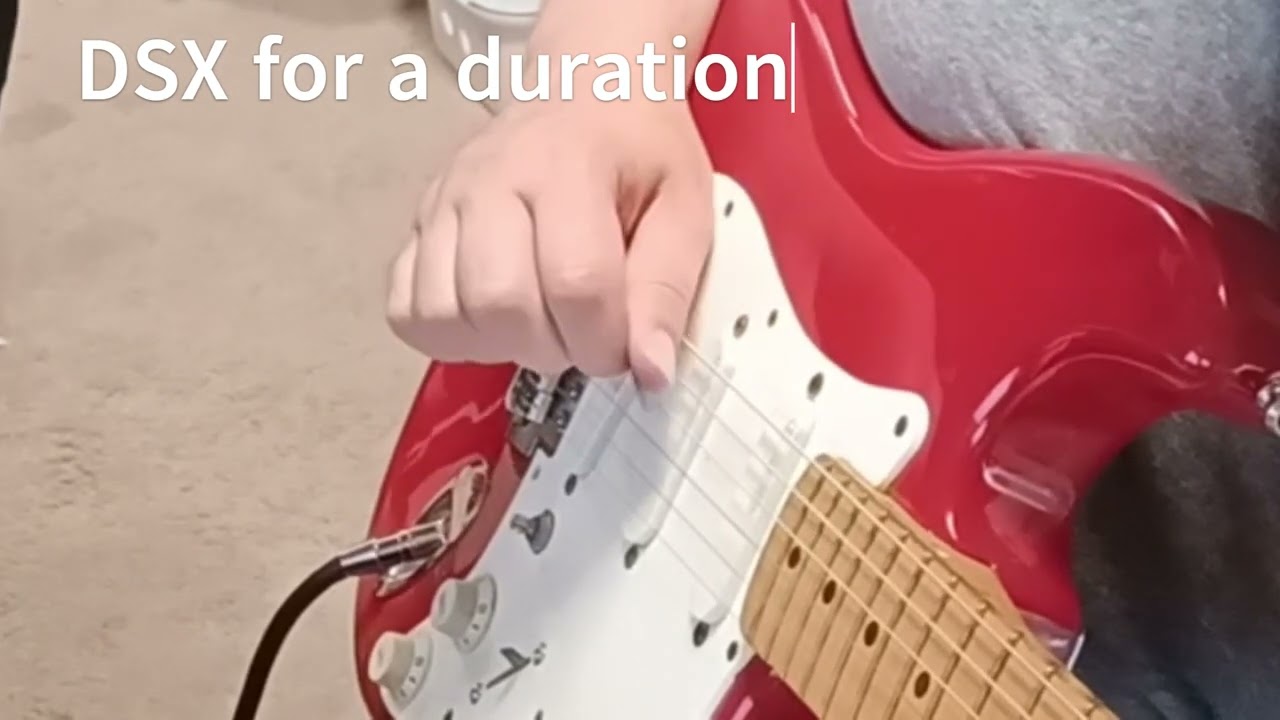
It has a video in it and a soundslice I’ve been working on that has a good mix of even/odd numbered notes per string and even some 1 nps sections
[https://www.soundslice.com/slices/PHhyc/](https://www.soundslice.com/slices/PHhyc/)
[ ](https://www.youtube.com/watch?v=1rTiAHgpcsc)
For the Andy method (which is an inspiration to what I’m going for) I’d say the overall concept is to not have too much of a slant because that can make whatever that helper motion is harder to access. Helper motions should be pretty subtle because drastic changes can result to flip/flopping and that’s going to create problems. The examples I showed were intentionally exaggerated but as I speed up they smooth out and may even disappear. I think I’ve been getting good results so far though. I’m practicing at moderate speeds with all the intentional rest strokes, then also making sure I just gun it sometimes and it seems like my hands sort of just “know what to, when they need to” which I’m sure is the end goal lol! I can’t imaging someone like Andy consciously thinking of this stuff for every pick stroke at the fast speeds. It’s got to be just pre-proprammed coordinations he deploying
---
### Author:  [@User-001](https://forum.troygrady.com/u/User-001)
#### Post date: [July 26, 2023, 3:27pm UTC](https://forum.troygrady.com/t/how-to-learn-helper-secondary-motion/68085/3 "2023-07-26T15:27:46Z")
> [@joebegly](#):
>
> not have too much of a slant
So I guess that is like the 0 degree pickslant used for reverse dart thrower wrist picking?
> [@joebegly](#):
>
> Helper motions should be pretty subtle because drastic changes can result to flip/flopping and that’s going to create problems.
> [@joebegly](#):
>
> sometimes and it seems like my hands sort of just “know what to, when they need to”
Does that suggest that I shouldn’t think too much about physically adding a helper motion?
---
### Author:  [@joebegly](https://forum.troygrady.com/u/joebegly)
#### Post date: [July 26, 2023, 3:57pm UTC](https://forum.troygrady.com/t/how-to-learn-helper-secondary-motion/68085/4 "2023-07-26T15:57:32Z")
> [@User-001](#):
>
> So I guess that is like the 0 degree pickslant used for reverse dart thrower wrist picking?
Yeah this Andy attempt stuff is definitely going to be in the RDT world.
> [@User-001](#):
>
> Does that suggest that I shouldn’t think too much about physically adding a helper motion?
I’ve definitely heard Troy talk about helper motions as a thing to not micromanage. I can’t recall if he’s gone as far as to say “don’t even think about them”. After all, much of the stuff he documents is the result of players just learning these things organically by going fast, having a feedback loop and making adjustments until it sounds and feels good to them.
(Not that we’re talking about DBX here, BUT) I have to remind myself, particularly with DBX, that some of the CtC concepts are more of a “here’s what we see _happening_”, rather than “here’s what you should try _doing_”. So, descriptive rather than prescriptive. Because some of these things we can’t really try to _do_. We just need to be aware of all the implications various setups have, assume a posture that’s appropriate for the phrase we’re trying to play and follow the feedback loop like the great players do. That definitely worked for me with DBX. I learned the core ‘motion’ in just over a week. Taking my own advice, it’s quite possible that the above video on mixed escape is just overkill and I/we should just be trying to play that Paganini theme as fast as we can and let our hands figure the motions out 🙂
I guess the big picture, for you, is that you’ve already got a couple different fast picking motions. What happens when you play phrases that require mixed escapes? I guess we’ve seen some of it in your other thread where you were playing the fast 3nps scales. That’s definitely a candidate for mixed escape required motions.
---
### Author:  [@User-001](https://forum.troygrady.com/u/User-001)
#### Post date: [July 26, 2023, 4:01pm UTC](https://forum.troygrady.com/t/how-to-learn-helper-secondary-motion/68085/5 "2023-07-26T16:01:23Z")
Great, this is really helpful @joebegly 🙂
> [@joebegly](#):
>
> descriptive rather than prescriptive
So should I trust the process while just making sure I’m not doing/experiencing anything ‘wrong’ (i.e. string hopping, tension, quick fatigue etc)?
Thanks again!
---
### Author:  [@joebegly](https://forum.troygrady.com/u/joebegly)
#### Post date: [July 26, 2023, 4:05pm UTC](https://forum.troygrady.com/t/how-to-learn-helper-secondary-motion/68085/6 "2023-07-26T16:05:51Z")
Yeah I really think you can’t go wrong with approach. Play fast, make sure the motion feels easy. Sloppy is a different problem. Excess tension and fatigue when playing at/slightly beyond the target speed mean the motion is no good. My favorite Troy quote is “It’s easy or it’s wrong” lol!
---
### Author:  [@User-001](https://forum.troygrady.com/u/User-001)
#### Post date: [July 26, 2023, 6:49pm UTC](https://forum.troygrady.com/t/how-to-learn-helper-secondary-motion/68085/7 "2023-07-26T18:49:43Z")
> [@joebegly](#):
>
> Sloppy is a different problem
Does ‘sloppy’ include missing notes/playing a note more than once in a scale run for example?
---
### Author:  [@joebegly](https://forum.troygrady.com/u/joebegly)
#### Post date: [July 26, 2023, 7:31pm UTC](https://forum.troygrady.com/t/how-to-learn-helper-secondary-motion/68085/8 "2023-07-26T19:31:27Z")
Uh missing notes, sure. playing notes more than once, I think that’s into ‘hand sync’ territory. Still a separate problem from picking speed/motion.
I honestly don’t know if there is a formal definition of sloppy in CtC lol! To me I also include things like dampening (i.e. not hearing un played strings, harmonics ringing etc). Some people might throw swipes in that category. I’m on the fence about that because if done properly they’re not audible. If done not quite properly (i.e. the Paul Gilbert lick) they can still sound kind of cool and give the phrase a little attitude.
I guess in this context where the goal is mixed escape, swipes would be a ‘mistake’ because our intent is to clear the string. If used as an engineering mechanism for string crossing where there is an intentional single escape that never changes…that’s not a ‘mistake’ because it’s part of the string changing strategy.
---
### Author:  [@Riffdiculous](https://forum.troygrady.com/u/Riffdiculous)
#### Post date: [July 26, 2023, 8:30pm UTC](https://forum.troygrady.com/t/how-to-learn-helper-secondary-motion/68085/9 "2023-07-26T20:30:49Z")
> [@User-001](#):
>
> Does ‘sloppy’ include missing notes/playing a note more than once in a scale run for example?
I’d say so. “Sloppy” perhaps doesn’t have a textbook definition, but I define it as “intending one thing, but not producing it”. So, if you meant to play A B C D E F, but what came out was A B B nothing E F, that’s sloppy. _Fixing_ that depends upon what exactly is going wrong.
In general, it’s probably a good idea to spend time on the simplest thing at which one is not that great. lol If you’re trying to play a 3 note per string scale ascending, 16ths at 200bpm, but you can’t accurately play frets 5 7 9 over and over as 16ths at 200 on a single string, that needs to get sorted first. Then you can tackle escape issues in the actual scale, whatever they may be.
You have good picking speed - as for sync and escape, that’s what likely needs work. But sync comes first, and single string work is king for that…
---
### Author:  [@joebegly](https://forum.troygrady.com/u/joebegly)
#### Post date: [July 26, 2023, 8:44pm UTC](https://forum.troygrady.com/t/how-to-learn-helper-secondary-motion/68085/10 "2023-07-26T20:44:19Z")
> [@Riffdiculous](#):
>
> If you’re trying to play a 3 note per string scale ascending, 16ths at 200bpm, but you can’t accurately play frets 5 7 9 over and over as 16ths at 200 on a single string, that needs to get sorted first
I need to remind myself of things like this more often lol!
---
### Author:  [@User-001](https://forum.troygrady.com/u/User-001)
#### Post date: [July 26, 2023, 10:03pm UTC](https://forum.troygrady.com/t/how-to-learn-helper-secondary-motion/68085/11 "2023-07-26T22:03:48Z")
> [@Riffdiculous](#):
>
> single string work is king for that
Do sync etudes need to be complex, or is something as simple as 5 7 9 like you mentioned sufficient for improving hand sync, or is it best to just practice whatever your goal is but as single string chunks for practicing hand sync?
---
### Author:  [@Riffdiculous](https://forum.troygrady.com/u/Riffdiculous)
#### Post date: [July 26, 2023, 10:24pm UTC](https://forum.troygrady.com/t/how-to-learn-helper-secondary-motion/68085/12 "2023-07-26T22:24:34Z")
Here are some examples. The first line is a 3nps major scale fingering, but done only on low E - the second is the same idea descending but on high E. The third line is an exercise in playing 16ths switching between 4 note and 3 note groupings. And of course you have stuff like the often-mentioned Yngwie pattern, or whatever else you can come up with,.

---
### Author:  [@joebegly](https://forum.troygrady.com/u/joebegly)
#### Post date: [July 26, 2023, 11:31pm UTC](https://forum.troygrady.com/t/how-to-learn-helper-secondary-motion/68085/13 "2023-07-26T23:31:48Z")
Love it. Doing patterns that repeat 3 fingers, but over “4’s” (16ths) is a great way to tighten up sync. I also noticed great results when doing things like this. I think accenting on all the downbeats, or even just beats 1 and 3 (or some other pattern you come up with that you control) is hugely helpful too.