Hi, Everyone. I think I stumbled onto Dart Thrower motion. Or at least I think it is. It feels like it. I show it and talk about it in this video. I just wanted to make sure it was really dark thrower, lol. Thanks!
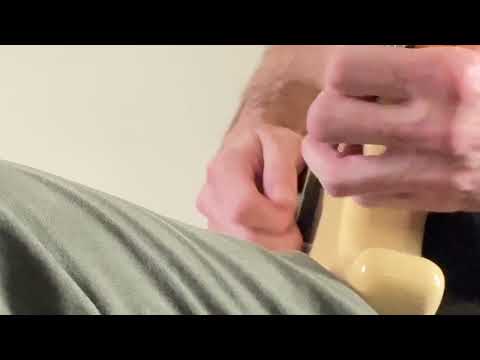
Hi, Everyone. I think I stumbled onto Dart Thrower motion. Or at least I think it is. It feels like it. I show it and talk about it in this video. I just wanted to make sure it was really dark thrower, lol. Thanks!
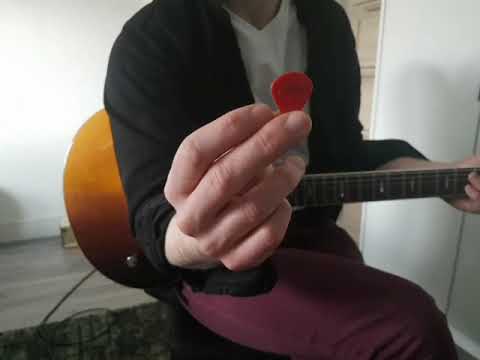
Try it with a trailing edge grip and you get real close to Shawn Lane style speeds.
This is my go-to picking motion, although I prefer to use a leading edge grip because I prefer the tone I get from it. I can even get DBX from this position by using trapped downstrokes most of the time and then quickly switching to wrist deviation when I want to escape on the downstroke - although this is much harder for me with the trailing edge grip.
I’ve yet to watch the entire video, but I must give you immediate props just for the shirt. He’s among my top favorite composers.
Hi, Tom. Thanks so much for letting me know! It felt like it would be that motion, but I really appreciate you confirming it. It’s such a fun motion. It’s really kind of very unique feeling when using it, but it’s very fun to play. Thanks again!
Hi @Bill_hall . No problem, glad to help.
It’s my favourite motion, too.
I was reverse dart-thrower player since I was about 15 years old. I developed mixed-escape alternate picking, double-escape and USX systems all based around RDT.
I started training the dart-thrower movement during the pandemic, after I was able to identify the movement in Shawn Lane’s playing. Within a couple of weeks, it was faster than the RDT based movements I had been using for half of my life. I already had a lot of USX vocabulary, so it was pretty easy to transition to DT.
I made a video about the movement for the forum here:

More recently, I discovered the rotator-cuff and elbow USX movement, which pairs really well with dart-thrower. I dislocated and tore my right shoulder a few years ago. This movement has actually helped to rehabilitate my shoulder, but I’ve had to learn to implement it more gradually.
Yeah, the technique just naturally facilitates those kinds of speeds. It’s ridiculous.
I prefer the tone I get using the leading edge grip for medium to fast speeds, too.
Thanks so much for the videos, @Tom_Gilroy. I appreciate you sharing them with me! Do you have any videos of you playing lines with dart thrower motion? I think that would be really neat to see. What part are you anchoring when you do it and where is the motion generated from? Thanks again and I really appreciate it. 
I’m happy to.
Not that I can link to right now. I have a lot of footage of my playing in lessons, but I’d need to sort through them and make clips.
If you’d like, we can schedule a chat over Zoom, if there’s a time that suits you. I’m on Irish time.
I have basically zero knowledge/skill in video recording and editing, but I can make a rough video demonstrating if Zoom doesn’t suit you.
I don’t like the word “anchor.” I don’t apply any pressure into the guitar, contact is for damping and tactile reference only, not for support.
That said, my wrist lies pretty flat across the bridge/strings. The thenar muscles (thumb muscles) touch the lower strings, but the ulnar (pinky) side of my wrist near the pisiform bone is also in contact with the bridge. The ulnar edge of my palm (karate chop area) doesn’t touch anything.
The movement is the hammer movement you demonstrated in your video, but I also incorporate some rotation on accents.
Cool video! Yes I agree with @Tom_Gilroy It looks like DT. You and I have discussed this before. I think the pentatonic examples in your interview, when you use more wrist technique, are this as well. I can see that this form looks more snare-like. So it may be a tweak on what you were doing before. But the more general idea of getting upstroke escape from this type of wrist motion – I think you’ve been in that lane for a while now. Don’t worry, we won’t hate for your “guy who casually learns all techniques” superpowers!