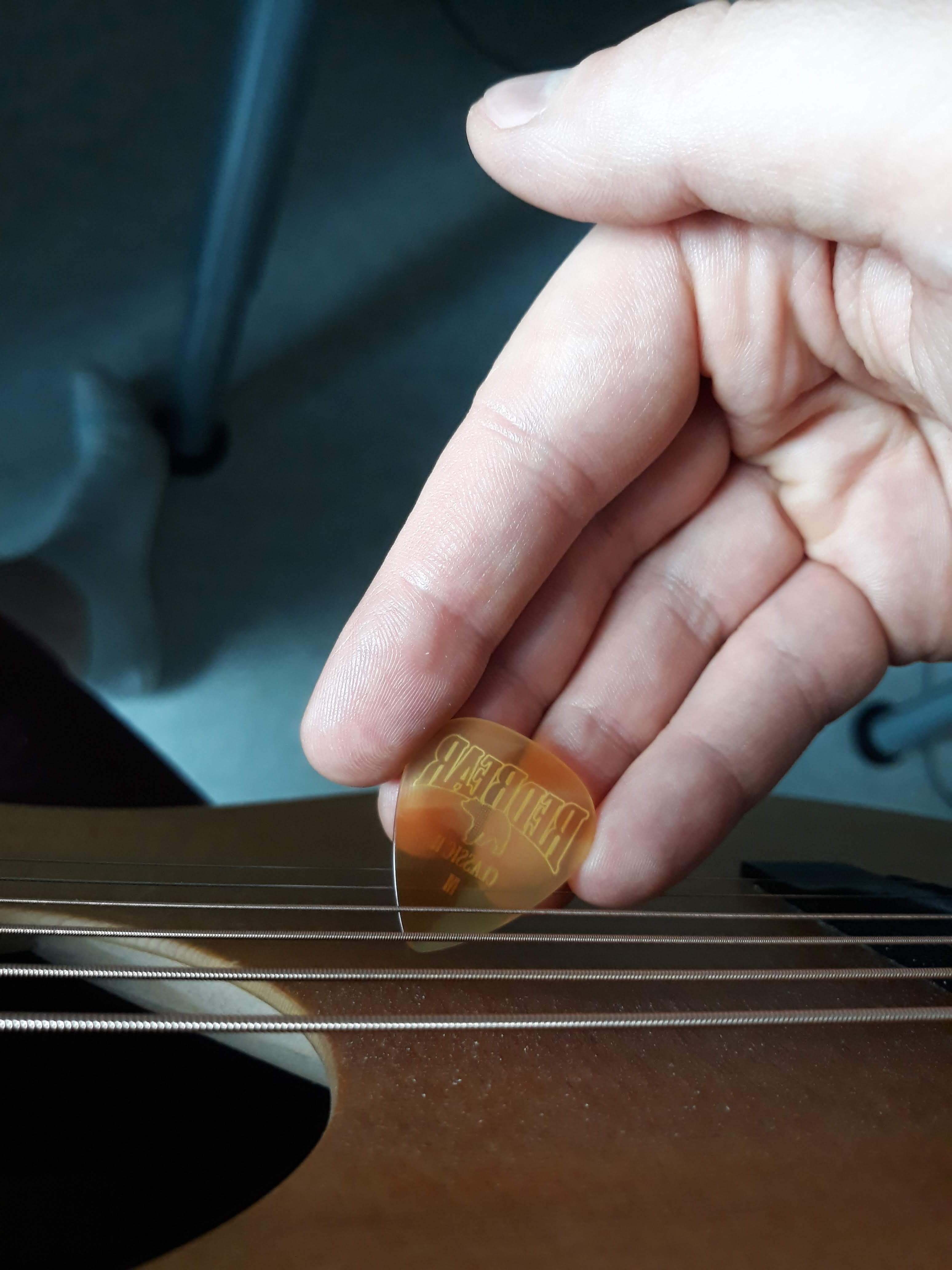
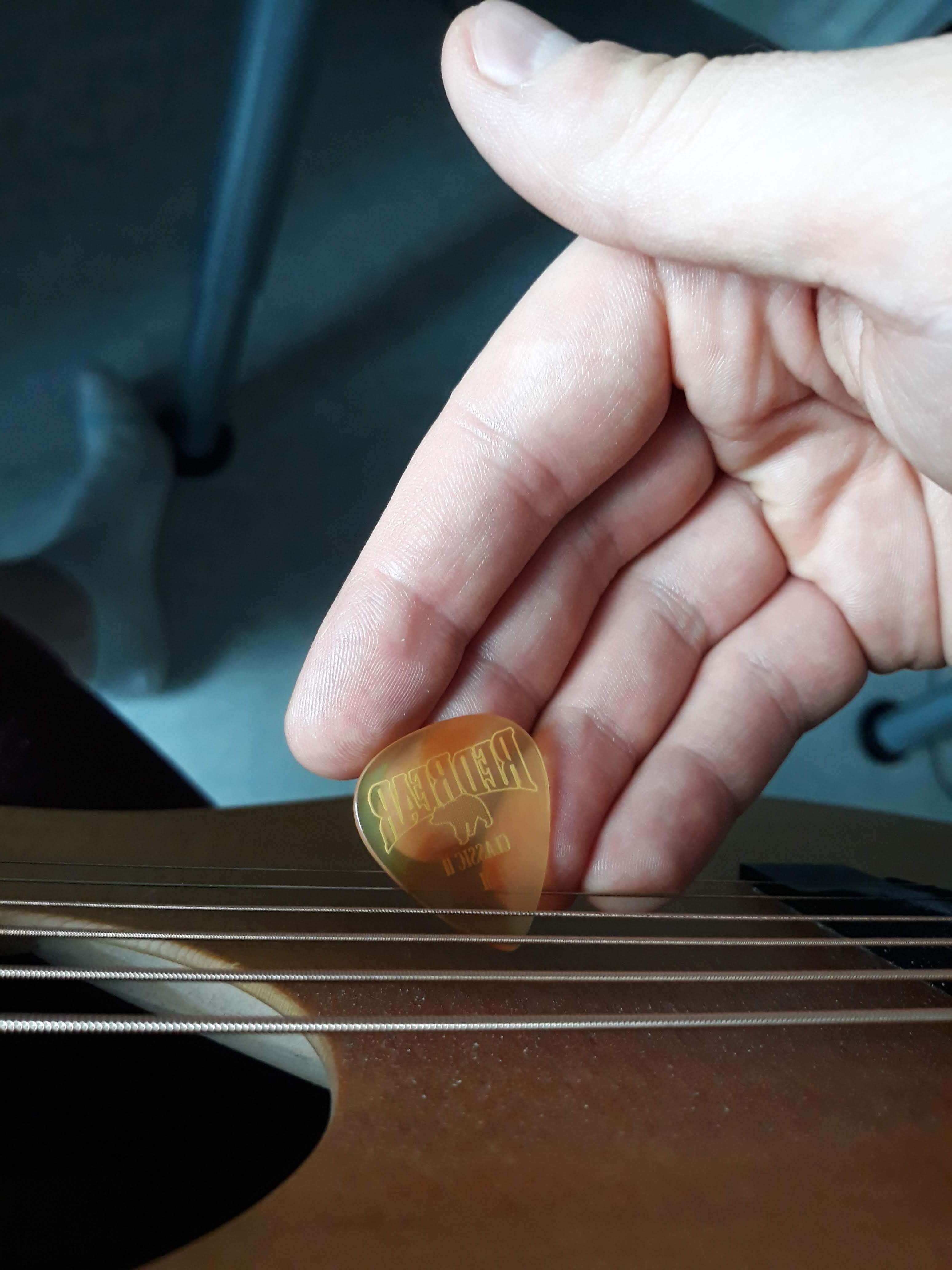
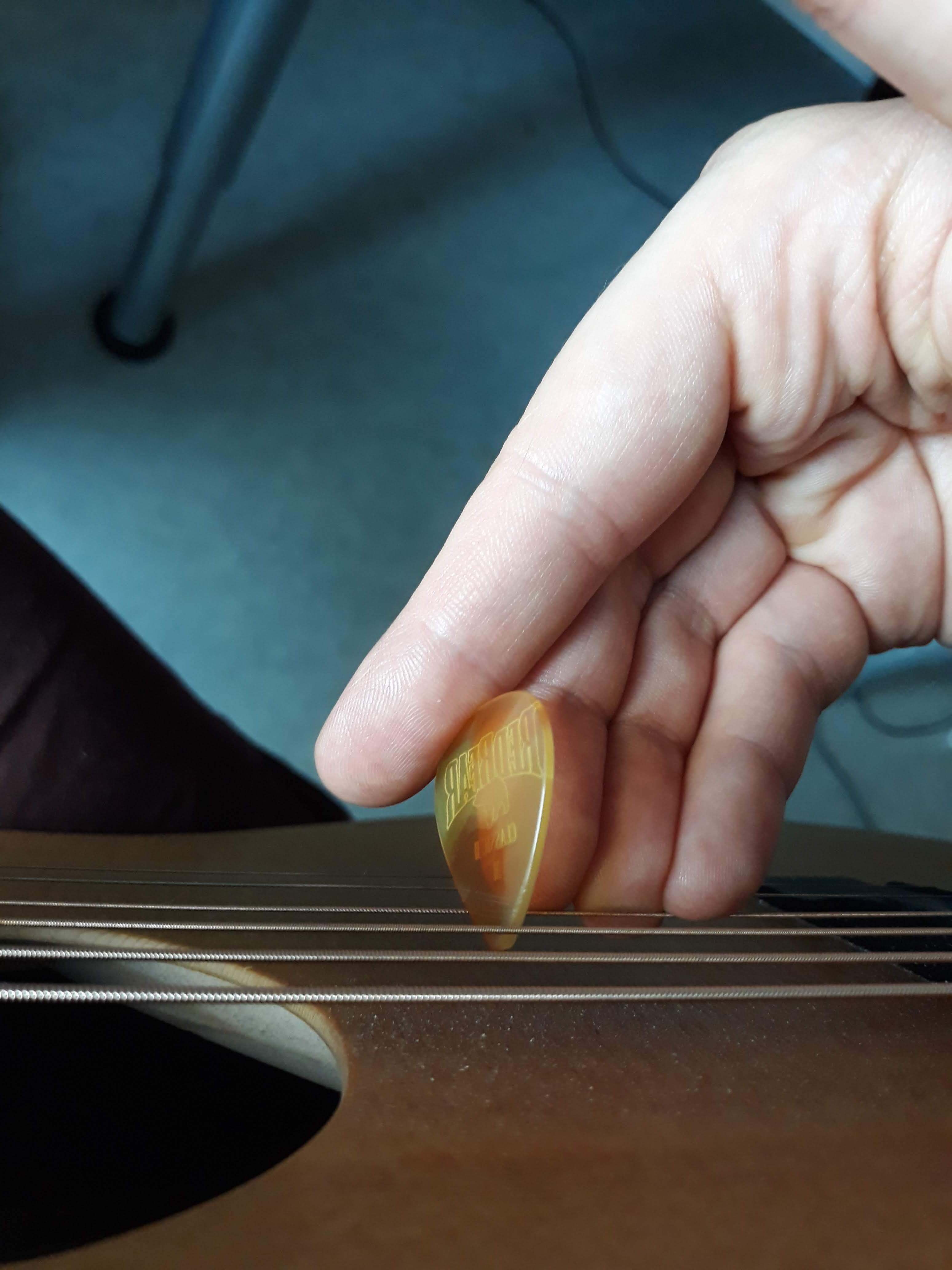
Yeah, I have, doesn’t seem to yield any different results

Yeah, I have, doesn’t seem to yield any different results
My random input: looks like your thumb is very straight, almost ever so slightly curving up. Have you tried bending your thumb down a little bit? I do so by bending my index finger more, so the pick feels like it’s rolling over the side of my index finger. Should make the pick strike more along the edge and be smoother.
I thought about that too! I’m definitely edge picking in the first video, and I’ve tried many degrees of edging. This is what you mean, right?
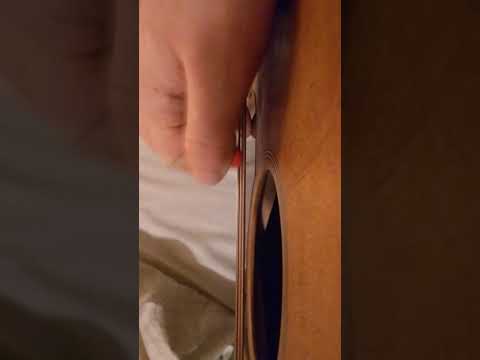
Can’t tell too much from the video because only the last 2 seconds seem to be working for me, but that looks like what I explained.
Other than that, the 2 things that stand out to me are:
Your picking speed (the time it takes to move through the top of the motion to the bottom and vice versa) is noticeably slow. Not the “notes per second”, does that make sense? If I were to pick that slow, I would feel things catch more, as there’s more time for you to feel the pick’s surfaces scraping across the strings.
To a lesser extent, your pick depth might be too much, but I would address #1 first.
Ah yeah had to reupload. That’s interesting, I haven’t thought about the speed aspect. I’ll give it a look.
Hmmm, I don’t know. It just seems like I’m getting stuck at different speeds lol
Can you take a shot looking down the neck at your picking angle? Idk if it’s the angle of the video or the way you are holding the pick, but something looks odd to me.
The angle that you are holding the pick with your thumb and index finger looks like its to pointed out, rather than down. Try holding the pick more like a T and less like a /. You have too much leading edge, so you are only edge picking, rather than using the ‘nose’ of the pick.
If that is uncomfortable to have the pick pointed down, rather than away from your fingers, you can try the Andy James signature picks, they’re a little larger, but have rounded edges, which would reduce the edge pick ‘scratch violin bow’ sound.
How did the single-string playing feel at the beginning of this video? Still jagged? To me, it sounded good and clear and I think – a bit hard to see from the video – the upstrokes were escaping! 
If you still feel jaggedness you could experiment with straightening the pick or having it tilted to the other direction (are there any CtC terms for this angle @Troy?).

You seem to be playing with the leading edge of the pick, i.e. the one towards the headstock. You could try varying the degree of edge picking for that side and see if that helps.
Note that these pictures might show the extremes of the variations, experiment with something that feels good to you! 
The pick slides back into your usual position in this video. You start with better form and have less leading edge, edge picking noise, but the pick slides in your fingers as you go a long and revert back to your norm.
As I suggested in my other post, try a different pick, Jazz iii XL or the Andy James or new John Petrucci (burgundy colored) picks with beveled edges. Even if you have a full sized pick lying around, see if that has the same issue.
Another idea to make things more chaotic: experiment with your forearm angle. The last video it looks like you might be closer to perpendicular to the strings, as opposed to parallel. This would cause the pick to travel more “up and down” the string, as opposed to across it (causing more pick noise and feel more noticeable).
When you strum up and down, it’s generally easier if the slant of the pick follows the strumming direction. Simplified, this can be achieved in two different ways.
You can keep your grip and the pick steady and change the picking motion so the pickslant corresponds to the strumming direction:

or you can keep your motion constant but change the slant with pick flop by holding the pick relatively loosely:

When strumming for real you’ll probably make some combination of those two variations depending on the situation. A third factor could be the pick itself bending to match the picking direction if you play with a lighter pick. That’s probably partly why some prefer a lighter pick when strumming.
I shot some examples of two strumming techniques I use, both played with a heavy pick that doesn’t bend. I can definitively feel pick flop in both examples, but I can also feel a change in the strumming motion itself depending on the direction.


I hope this clarifies things a bit!
Sorry for the delay, made a down-the-neck video as requested by @Insanefury but the other one just loaded up quicker, so I’m posting this one first. I actually begin to find a little bit of ease in this one, but as soon I try to introduce the tip, it immediately gets caught.
Honestly though, I only seem to find success when I use the “underside” of the pick - anytime I introduce the tip, it gets stuck. No idea as to why. Here’s a vid demonstrating that.

I will be back in about 12 hours. Keen to apply what you said about strumming to my playing. It’s nearly 4 o’clock in the morning here in Brisbane and I have to do some work tomorrow (today). Thanks all, I haven’t solved the problem yet, but I haven’t quite given up hope yet.
The straight sounds better, but is getting stuck because you are not used to that feeling. Yes, you will mechanically have to alter some things, wrist or forearm, but it is a start. The sound is good, which is important.
Try the second pick grip (perpendicular) and palm mute. Just play a steady 16th note E on the A string, alter your speed, but try it palm muted. My guess is that will turn your forearm/wrist just enough to allow you not to get stuck on that string and from there you can lift your palm (slightly) off the string to unmute and then back down.
@Insanefury here’s the down-the-neck vid. Yeah the single note lines are coming out ok, but it’s still very uncomfortable, and it’s particularly hard playing on lower strings.

@AndreasNasman Yes, it felt very jagged. I’ll upload myself strumming with a heavier pick and then the jazz III and see if that sheds some light on anything. I’m still confused.
Honestly, I played with the tip of my pick until quite recently. It’s not so much that I’m not used to it, it’s just that I never found a way to make it work without it getting stuck. I’ll upload a vid of me playing the 16th notes soon.
Well that seemed to work, so thank you! I’m confused as to why though - not sure what you mean by turning my forearm/wrist. As in, I wasn’t deviating my wrist enough before? I feel like I was doing that same basic movement at the end ofthe previous vid. Anyway, here’s the new vid.
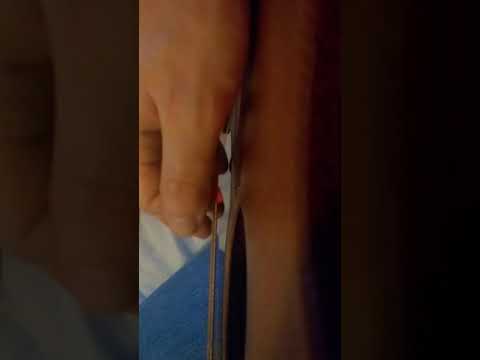

This is how I strum. My perception is that it’s all downward pickslanted, although the pick is now more perpendicular. Am I incorrect in my perception?
I’m not still quite sure exactly what you want to play or which techniques you want to develop, so this is just my assumption from your previous answers. Feel free to correct me if I’m wrong!
I think it could be helpful for you – at least for now – to think of single-note lines, regular strumming, and gypsy tremolo as separate units, each requiring some variation in your picking motion or a completely separate one. Looking at the videos, my impression is that you’re trying to find a common picking motion that works for all the above-mentioned cases. I think you’ll have a hard time achieving that as each scenario has its own challenges and usually need their own approach.
I think most of the advice you’ve received on this topic (except the strumming suggestions) applies to single-note lines, i.e. playing on a single string at a time. To me, it seems that you’re gravitating towards an upstroke escape motion – USX motion for short – as you play with a downward pickslant and your upstrokes reach above the strings when playing on a single string. If you want to develop this kind of playing and play lines that switch strings, the things you play have to fit this system to avoid stringhopping, the garage-spike problem, etc. You can find more information on this e.g. in the Pickslanting Primer (not sure how much you can access without a membership!).
I think your description is correct. However, if I try to replicate your setup I run into the garage-spike problem mentioned earlier. The downstrokes work fine, but the pick digs under the strings on the upstrokes. Adjusting the picking motion with some forearm pronation and loosening the pick grip a little to allow some flop does the trick for me.
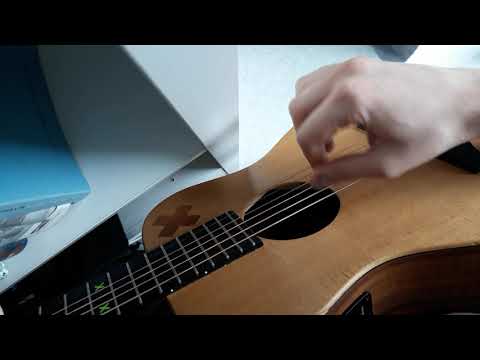
To be honest, I’m not quite sure how this is done. Looking at the clip with Joscho it’s hard to spot any changes in pick orientation, flop, or slant. Maybe it’s a bit different than regular strumming? I can’t tell for sure, but I think so. Troy or someone else can probably tell you exactly how this is done, but here is my take on it.
I think I do this with about zero degree pickslant – completely perpendicular to the strings – with the only thing making the pick go over the strings being edge picking. It’s a bit easier to do closer to the bridge, but it can be done close to the headstock too (even on the fretboard!). It’s possible to play this with a tight grip, but it sounds a bit smoother and gentler with a looser grip.
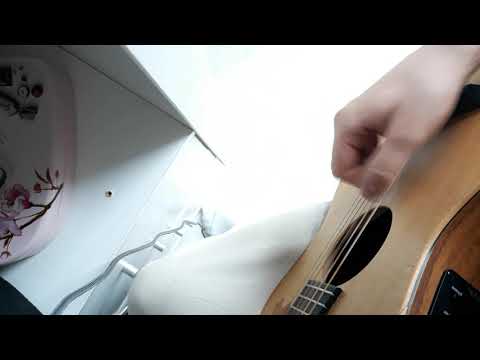
Does this shed some light on the issue(s)? It’s great that you post video examples of your playing as it’s easier to troubleshoot and debug, plus it’s good practice to try and see exactly what is happening motion wise when someone is playing!
Hey @AndreasNasman - interestingly I’m having more issues strumming than doing “chugga chugs” at the moment because the struming movement is slightly more complex, but as this vid hopefully demonstrates, it feels like it uses a lot of the same elements as single note playing. But the rotary movement also exists.
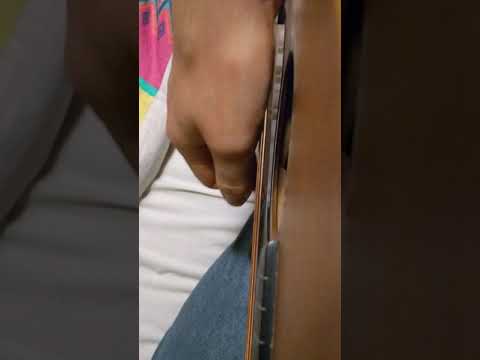
I’m still having consistency issues but that’s the case for pretty much any picking movement. Hence why I’m still wondering what the cause of the pick snags - I’ve figured out how to use the tip as consistently as the “underbelly” or the not-tip of the pick before, but I have no idea why it was getting stuck in the first place. I’d like to know, because I’m one of those players who needs to understand exactly what he’s doing, otherwise I can’t continue to replicate the movements. I’m playing with about 95% of the ease that I was getting with the Flow picks, so that’s nice.
Honestly, one of the main reasons I switched to this pick was to learn more about my own picking mechanics - but I’m not even sure why the pick snags went away, and I’m not super keen to try to replicate the problems and potentially screw up my muscle memory. Maybe @shredhead7’s advice for some reason triggered something in my subconscious, or perhaps my hands just decided to work for me after I went to sleep and didn’t play for 12 hours
PS thanks for taking the time to respond is such detail! I really appreciate that.
I’m glad that my advice worked. I can’t tell you why it works, just that it has worked for me. I noticed it when I was trying to play Al DiMeola runs, that palm muting made the string tighter & put my pick hand in a different position, so I reversed engineered from there. In your video that you posted with you muting the lower strings, don’t stop and lift your hand, just play muted and while continually playing 8th notes, lift the mute off play some more 8th notes, and then back to mute. Back and forth is how I worked out some picking problems.
For me, single note lines are palm down, against the bridge in most cases, and strumming can be Gypsy style high arch, aggressive downward angle on the pick (if I’m going for that fast flamenco 32nd thing, to more moderate arch, floating hand, cowboy chord strumming, which would be more traditional. If you are after the last, I do think that you would benefit from a larger pick and try to focus on the grip, getting the tip more downward.
My guitar teacher taught me a great way to learn to play to a metronome and work mechanics, which I think may benefit you in this case. His advice was to only play the first five notes of the scale 1 e & a 2. 1 e & a 2. I think that you can use the same approach to strumming, pick tip down (instead of out), 1 & a, 2 & a. Stop. Repeat. Down down up. Down down up. After that, play 1 e & a 2. stop. Down up down up Down. Start with an open G at the third fret. Down, up down. Be aggressive. Acoustics are meant to be heard. Do the same thing with a C chord, then a D chord.