
Advertise elsewhere. In fact, go and have a chat with Anton Oparin, I’m sure you’ll get along well.
@mwright thanks for sharing the videos. I’m not sure why anyone would doubt the benefits (and existing literature supporting this) of starting young. Anyway, on a more important note re holding the pick-
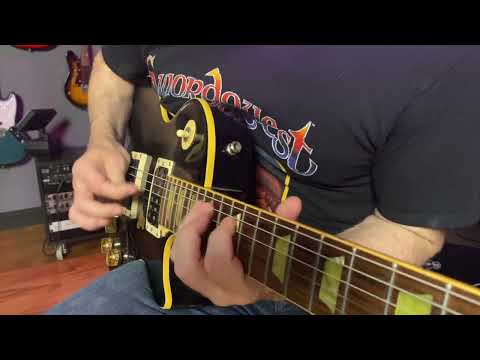
What is the logic and justification of having a bent thumb, resting your pinky (outstretched) on the guitar body, and then pressing your middle finger against your index in such an unnatural way? This is what you actually do often when playing.
I find it hard to believe this conforms to any sort of biomechanical optimisation. Both the CTC ‘minimal effort pick grip’ and Anton Oparin’s three finger method seem more based on optimisation (with valid justification) than this. Not a dig, just a genuine question.
2 Likes
Sounds incredible! Fantastic playing!
1 Like
I understand what you mean and, under any other circumstances, I would have suggested watching the video but I don’t feel comfortable recommending snake oil to anyone. It’s just a shameless plug of what amounts to a strawman of Troy’s and others work.
3 Likes
I think all else equal, starting younger is helpful vs starting older, as brain plasticity does decrease with age, so it’s a little easier to sort of trial and error into efficient movements when you’re younger. But it’s hardly a prerequisite for a high level of technique, so it’s not like if you’re coming at this at 35, there’s just no hope for you, either.
4 Likes
As I’ve mentioned: I have personally watched a mutual friend of ours go from “pretty good” to “terrifying monster” in his 40s before my eyes. Neuroplasticity might go down as you age, but it doesn’t just disappear.
2 Likes
Speaking personally, I wouldn’t call myself a monster yet, but I picked up the guitar at 15 and spent the next 20 years just leaning hard on legato because my picking technique was, well, I don’t think you understand just how bad it was before I signed up here.  IT turns out just understanding mechanically what was going on in my technique opened up a LOT of avenues to me.
3 Likes
I think it’s worth pointing out that I do not think that what Mr Wright is teaching is in any way a bad actual system - there are monster players that it works for, and it has similarities with the methods of people who I respect as monster players and musicians - reminds me of how Robert Fripp teaches his students, for example, and does seem to converge a lot with what Anton Oparin has been teaching, as far as I can tell. Our own @Tom_Gilroy has spoken about figuring out a similar system when he was a teen himself.
My issue is that trying to claim that it is perfect or a universal approach to picking doesn’t hold up; while it’s a powerful and efficient technique, there are some styles and sounds that it doesn’t work with. You can’t get the same attack as an upward escape player who uses rotation as their primary driver like a gypsy jazz player with a primarily deviation picking motion, for example.
And that context is what I appreciate about Troy’s approach - he’s looking at what players actually do, and how their technique suits the music they are creating, rather than trying to determine an “optimal” technique, because the question is always “optimal for what?”
Also, his video includes a lot of veiled references to Troy’s work in a disparaging way, which just isn’t cool, but it makes sense because he’s trying to sell something.
6 Likes
I would have to defer to much greater minds than my own like @Tom_Gilroy @tommo for a real breakdown of what is wrong with his findings, but without question this is plagiarism. In fact, this is just a carbon copy of Antons Oparins method.
The real issue as people have noted is the backhanded, subversive slant of it all.
Anyway, to the OP, sounds great (love the authentic bluesy phrasing and tone in one of the videos) keep it up!
I don’t think it’s plagiarism; I think it’s just that multiple people have converged on a movement solution that works very well and are teaching it. Multiple people can come up with the same theory - Newton and Leibniz, how various different cultures without contact discovered pi, etc.
3 Likes
Awesome playing! I love that!
1 Like
Thank you so much for your kind words, it’s so pleasant to see how struggling it was at first, and feel the movement becoming more and more natural over time. There’s still a looooot of work to do, it’s only the beginning of the USX journey 
3 Likes
Man if you’re at the beginning of the journey I envy you. You sound smooth and powerful. Great stuff.
If that’s what struggling looks like, I think I’m gonna need a new hobby .
For real, your playing sounds really smooth and, most importantly for me, effortless. What do you feel now that your technique has been improving in your desired direction? Does it feel like you have to exercise additional physical strength or mental focus?
1 Like
Haha, thanks a lot! If you go back and watch the first videos in my thread, I couldn’t even play a 16th-note tremolo at 120 BPM. Even that felt impossible because my motion was really forced, I was super tense, and my hand naturally wanted to go back to DSX.
I’ve felt a pretty big improvement after a little over a month of practicing USX intensively. A few things really helped me.
The first one sounds stupid, but just trying to keep my wrist as relaxed as possible and using more of the natural weight of the hand instead of forcing the motion with the wrist. I feel like it lets me play in a much more relaxed way, and I’ve definitely noticed an improvement in both fluidity and speed.
The second thing was using rest strokes as much as possible and basically imagining that I’m aiming for the body of the guitar when I pick. So on a downstroke, for example, I kind of think “go toward the body.” Obviously I’m not actually trying to hit it, but that mental image helps stop me from falling back into my natural DSX motion.
The third thing was the pick angle. I use a pretty strong downward pickslant, and I actually exaggerate it in my head, almost like I want the tip of the pick to point toward the ceiling. Obviously it’s nowhere near that extreme in reality, but when I get that angle right, picking feels easier.
None of this is automatic yet though. I still have to actively think about it while I’m playing, like “relax the hand, get the angle right, aim the stroke this way.” If I stop thinking about it, I can still tense up or fall back into old habits.
One thing I’m still working on is muting. With my old DSX motion, the thumb side of my hand was basically sitting on the strings all the time, so muting came very naturally. With USX, I tend to have the hand a little more pronated and sometimes slightly off the strings, which is actually more comfortable for some phrases, but it can make muting harder. I’ve seen Troy’s videos about this and I know it’s not necessarily a problem, so I’m trying to work on that too.
And for the anecdote, what really made me want to work seriously on USX was seeing Eric Johnson live in the Bay Area about three months ago. I remember coming out of the show thinking, I really need to force myself to work on this, even if it means changing my technique, because I absolutely love those cascading pentatonic lines and I want to be able to play that kind of stuff.
Funny thing is, EJ seems to pick those lines a lot less now anyway. A lot of the pentatonic cascades he plays live these days seem much more legato-heavy than pure economy picking.
Just sharing in case any of this helps someone.
2 Likes
I appreciate the kind response. I don’t mean to come off as abrasive… Really. 
I can just get a bit passionate about this topic!
RE: Pinky
The reason I prefer pinky resting SOMEWHERE on the guitar is for proprioception (“seeing through feeling”). If it’s not touching the guitar and I need to play passages with ringing notes (EG: Carpe Diem section from A Change of Seasons / Dream Theater), then I still have some sense in space of where my hand is above the strings. When you float without any kind of something touching the guitar, you are required to activate many muscles in the pecs/lats, shoulders, and forearm to attempt to get stabilization… This leads into the “too long of a lever for accurate control” that I allude to in my motion video (Neuroscience of Picking).
I am never exerting any kind of “force” through my pinky. It’s hanging there limp. In fact, my JP15 has a glossy worn spot where my pinky has dragged along for years. Ha!
RE: Thumb
In my technique, specify that the thumb should only be used for one thing, and that is adjusting the pick ANGLE**. Not the pick slant. Many people preach a 45 degree slant. I find that a 45 degree slant is too fluffy. Flat is problematic because the pick doesn’t slice through the strings. My recommendation is to see a middle ground. (“22.5 degrees”)
While the pick, *pick grip strength, *pick depth, *pick angle all matter a ton… We should not discount the major impact that the Amp/IR combo you use can accentuate harsh articulation.
(* = These are the elements of a concept I call the Articulation Triangle)
Start experimenting with each of the aspects I listed above with no volume or an unadulterated clean tone. Find a combination of those that produces a desirable attack, then go to whatever sound you regularly play with.
On picks - I and many of my students find that the Flow style picks work well for my recommended hand setup. I especially like the Flow picks because they come in all different sizes. I prefer JP Flow 2.0 for “shred”. I use the 0.73 for cleans. I use Dunlop Jazz III XL Max Grip w/ the rock/country-ish band I play in. The Jazz III XL is a little steeper, which is great for more articulated parts w/ string skipping.
** - The only other place I use my thumb in technique is some final, slight adjustment when doing sweep picking to help maintain the angle…
(It also comes up in 1NPS stuff… But this is a totally different animal than sustained shred.)
RE: Middle finger
I recommend “stacking” the middle finger onto the index finger.
This is because when it hangs loose and you’re playing on low strings, it risks bumping top strings. This works for some players, but it takes effort. Sometimes, when I’m playing 7 string, sure… My middle finger does come off a little bit. I’m not a robot.
If you use the “fist” style grip, I find that for many players (myself included), the last joint of the middle finger sticks out bumping the strings. Players compensate in all kinds of ways:
- Floating the hands > poor string accuracy / not knowing where they are
- Rotating the wrist/arm upwards to get the joint off the strings > compromises muting
This CAN depend on individual hand geometry, but closing the fist entirely MAY compromise the availability of other motions.
A fist grip with the pick rest ON or past the last joint in the index finger also compromises a helpful degree of motion to be had with index finger+thumb movement… Again, only for slight final positioning of the pick and NOT the primary picking motion.
RE: Biomechanical optimization
I think anyone would be hard pressed to argue that any particular grip offers a particular advantage with the same degree of exactitude that one may argue any particular picking motion may provide a benefit…
This is because the grip is the final moment at which our hand interacts with the instrument. The instrument was not made for our hands. It was made for the strings!
So, unlike picking motion (which may be affected in a variety of ways), pick grip is a place where we must consider how to conform to the guitar not with “the best grip”, but one that offers the least amount of drawbacks.
Hope this clears things up!
1 Like
A side note: there’s a thread floating around somewhere where a former member of the board (sadly passed away) detailed how to pick every note of EJ cascading pentatonic fives with DSX. It’s actually doable! Point is moot now, though, since your USX is sounding great
1 Like
I’ve seen that, awesome video. But the EJ songs are so naturally wrote for USX, if you want to play Cliffs Of Dover DSX, it’s a complicated path to write back everything to match this motion (incorporate hybrid, and even swybryd from Marshall Harrison help).
For years, I considered this song litteraly impossible to play for me, I couldn’t even think about reaching that intro speed, now I feel I will be able to play it someday (with a tremendous amount of work, and I mean “play” it, no “master” it of course). 
First, I want to clarify my tone here: none of this is meant as hostility. I’m simply trying to be truthful, direct, and precise about the claims being made.
RE: Anton:
I have never ever signed up for any lessons or training with Anton. Anton’s YouTube videos reveal relatively little about his technique. It would only make sense that we arrived upon similar conclusions because both Anton and I developed our techniques by reading science and not by observation of players.
I’ve also had multiple students come through my course and experience positive results after previously training with Anton. Both of the players which come to mind were NOT slow players or newbies. They were already pretty fast. Like at least 160 bpm 16ths fast. I think that’s relevant when comparing the approaches.
RE: Troy References
“A lot” is inaccurate. The entire series is just under 2 hours long with me talking about Troy for a handful of sentences. This makes up well under 2% of what I talk about.
The only references to Troy in my work are in video 1, where I point out correctly and with multiple scientific sources to say that trying things immediately at speed is of little value. This is further reinforced in my second video with abundant scientific resources going back over 200 years.
The second overt reference to Troy in my work is in video 2, where again, I point out that the motion of the body is not the same as the pick. Describing a picking motion as “USX” or “DSX” describes the motion of the pick, but it doesn’t describe the motion of the body. I then immediately show in the video how the only 5 different fundamental motions our body can offer us can all achieve what is known as “double escape picking”.
Troy is aware of my work and we chatted in the following thread, where I clarified both my mistakes, as well as my intent. It’s even in the replies of the pinned comment of my practicing for speed video, basically as visibly as I could put it!
RE: Universal technique / "People shouldn’t just copy you"
All of the understanding in the world of “what motion is best” does nothing for you if you cannot get your body to do it. This is what I have figured out. It’s why all of my students develop technique which is virtually the exact same as mine… And why they can develop that technique in a matter of 2-4 weeks.
This should ultimately be seen not as “universal” *, but rather as a starting place and a training ground that eliminates the flaws encountered with many other approaches. I am even planning to create a video here soon called “Convergence and Divergence” which goes over how people who follow my method’s technique will become very similar to mine, and then they can create small modifications based on what they need. But usually, modifications aren’t needed because the technique is so capable… Which is also why I have students who benefit from my training methods even though they come in playing faster than me or become faster than me. I had a guy yesterday working on 140 bpm sextuplets multi string.
- This is one of the only pieces of hindsight I have in all my videos. I WISH I said that this is a starting place… And you can modify later.
- The only sense in which My recommended technique is universal is that I developed it with consideration of not using motions that some people would not be able to do, such as bending their thumb very far backwards.
I’m always open to kind, substantiated discussion, but I’d ask that people bring evidence to the table as I have. Across this series, I reference more than 30 scientific sources, along with endorsements and commentary from motor-learning scientists, psychologists, and other relevant experts beneath the videos. Not to mention the consistent student outcomes.
Hope this clears things up!
1 Like
What is your opinion on the Warp 3 video? In fact I feel like I saw you discuss it with Troy on forum at some point 

This is an important distinction to make but I would point out Troy also makes that distinction and has done for years, the problem is people who watch a little bit of Troy’s work and miss this
You also seem to recommend people away from the trailing edge grip? Troy wasn’t able to hit Shawn Lane speeds until he experimented with it:

1 Like