# Sweep picking arpeggios CAGED options analysis breakdown. Rest Stroke Gypsy Jazz Picking USX
**URL:** https://forum.troygrady.com/t/sweep-picking-arpeggios-caged-options-analysis-breakdown-rest-stroke-gypsy-jazz-picking-usx/74745
**Category:** Teacher's Lounge
**Created:** [January 31, 2024, 9:21pm UTC](https://forum.troygrady.com/t/sweep-picking-arpeggios-caged-options-analysis-breakdown-rest-stroke-gypsy-jazz-picking-usx/74745 "2024-01-31T21:21:06Z")
**Posts on this page:** 3
**Page:** 1
### Author:  [@bradejensen](https://forum.troygrady.com/u/bradejensen)
#### Post date: [January 31, 2024, 9:21pm UTC](https://forum.troygrady.com/t/sweep-picking-arpeggios-caged-options-analysis-breakdown-rest-stroke-gypsy-jazz-picking-usx/74745/1 "2024-01-31T21:21:06Z")
So I am learning this song, and there is this one arpeggio phrase that is giving me some problems. I will show you how I approach finding a solution by using the CAGED method.
[Dorado Schmitt - Nice Song](https://www.youtube.com/watch?v=R6nWRpAWnXg)
Warning: Do not trust this tab completely, although it does have very high accuracy there are also a few mistakes if you decide to learn it. So just use your ear, and correct the few errors.
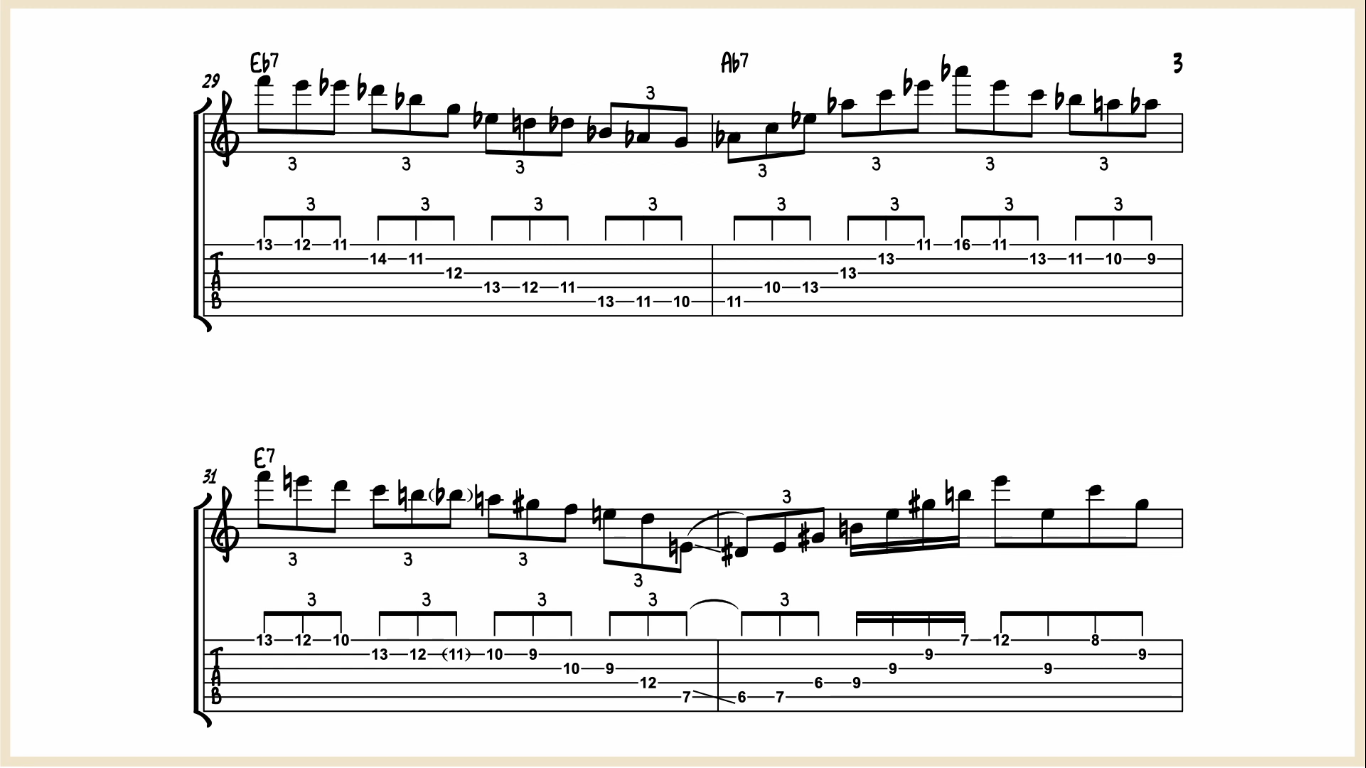
So here I am working on measure 32. This is one approach to playing it, but we have 5 with possibly maybe a few more variations that I could try. Now I would try each one to see which might work tone wise as well as flow, or maybe one that I could actually get faster than the rest to polish up over time.
**Note throughout I will also be showing other ways to play the prior musically descended lick.**
Now in the particular instance we have the A variation of the CAGED method.

Second A variation with altered picking articulation.

Third A variation with altered picking articulation.
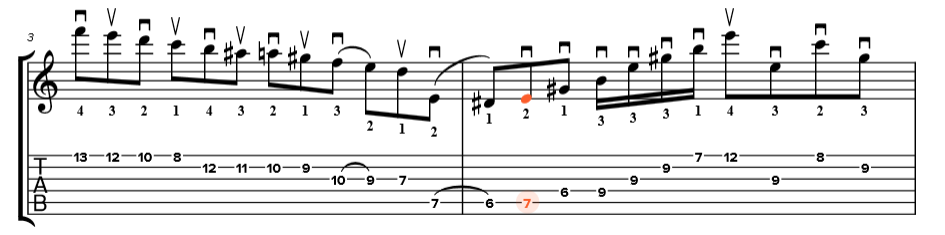
Since I have worked on some Joe Stump stuff we could try using his method utilized the 6 string E variation shape.

There is a G variation shape as well.
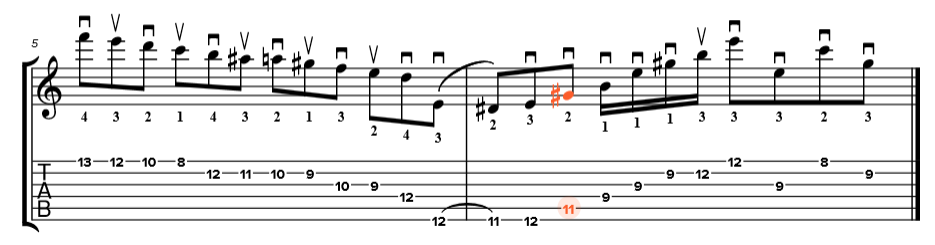
Here is a C variation shape.
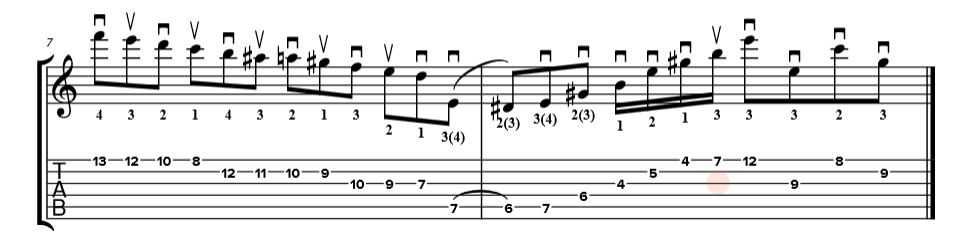
Here is a D variation off the 5th string since the E on the 4th string is so far away. The D variation is the upper portion of this shape from the low E, but see the pattern from the next E off the 4th string. First is the D variation shape to show the pattern, and the second is the secondary options of the same style shape off the A string.
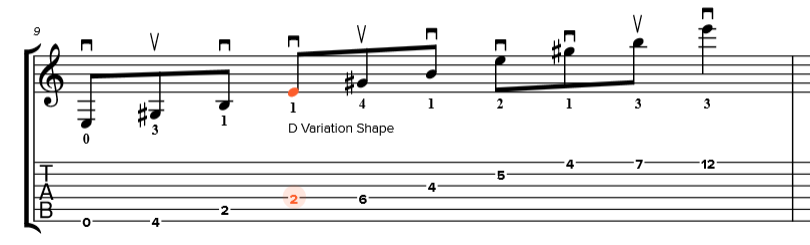
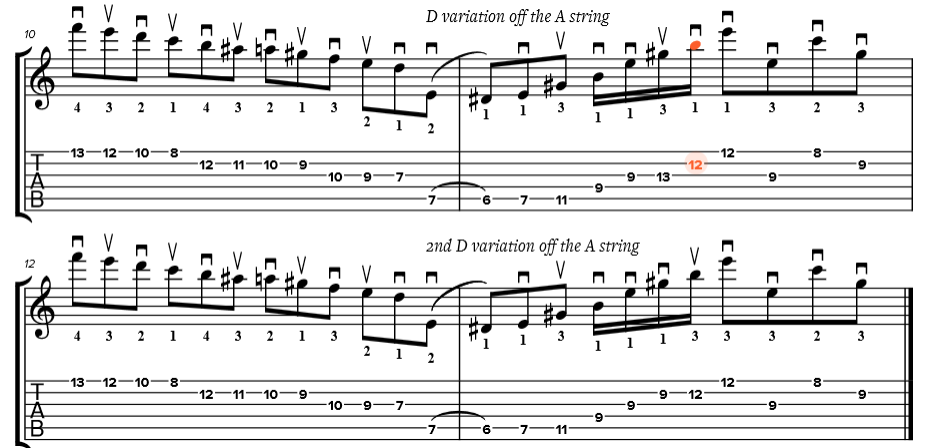
So now I hope maybe you guys can get something out of this example of what you can do to tackle arpeggio phrases by utilizing the CAGED method to find other ways to approach them.
---
### Author:  [@BlackInMind](https://forum.troygrady.com/u/BlackInMind)
#### Post date: [February 1, 2024, 10:54pm UTC](https://forum.troygrady.com/t/sweep-picking-arpeggios-caged-options-analysis-breakdown-rest-stroke-gypsy-jazz-picking-usx/74745/2 "2024-02-01T22:54:18Z")
I actually find USX, particularly using the Yngwie approach of forced up escapes using pull-offs and downward sweeping, to be the most effective way of navigating CAGED based scale and arpeggio patterns.
---
### Author:  [@bradejensen](https://forum.troygrady.com/u/bradejensen)
#### Post date: [February 2, 2024, 6:19am UTC](https://forum.troygrady.com/t/sweep-picking-arpeggios-caged-options-analysis-breakdown-rest-stroke-gypsy-jazz-picking-usx/74745/3 "2024-02-02T06:19:41Z")
There isn’t too much different from Yngwie’s approach here, only the use of the double down, or sometimes called half rest stroke. As well as sometimes they will rest the pick during a pull off or hammer on to get to the upstroke escape instead of doing downstroke and upstroke to get to the pull off during a musically descended phrase. It is sad I have suggested to soundslice to add in the notation for this particular picking motion of a downstroke half rest stroke so as to be able to differentiate between the two different down rest strokes when reading tablature.