Any one know of any classical etudes that I could play daily to improve alternate picking accuracy and speed? free resources are preferred but I’d spend a little.
Virtually anything from the violin repertoire can be adapted to lead guitar.
1 Like
If you can read notation: the Kreutzer violin etudes. You can find EVH’s Eruption tremolo melody almost immediately.
3 Likes
Steve Jeffrey’s book is very good - Steve Jeffrey - Niccolo Paganini - The 24 Caprices For Electric Guitar - The Complete Guitar Tab: Develop Your Artistry And Technique : Jeffrey, Steve: Amazon.co.uk: Books
3 Likes
Thanks for the suggestions guys, I’ll definitely dig into the caprices. sounds like exactly what I’m looking for.
I really love the J.S Bach sonatas and partitas for solo violin. I used to use them for alternate picking, but these days I’m a confirmed economy picker.
Steve Vai kind of famously used the 5th for the basis of his Crossroads - technically, the Karate Kid’s, I guess - ending solo. worth a look too!
4 Likes

2 Likes
This just flashbanged me. I grew up with this video. Insane to think that 25 years later Alexi’s dead.
4 Likes
A big loss indeed.
On another note, his right hand technique looks fantastic in that video.
2 Likes
Here are few you guys are welcome to use that I’ve learned in the past:
Bach - Cell Suite No1 in G Major.pdf (545.7 KB)
Winter 1st Movement - Vivaldi.pdf (433.3 KB)
Summer - III Presto - Vivaldi.pdf (492.4 KB)
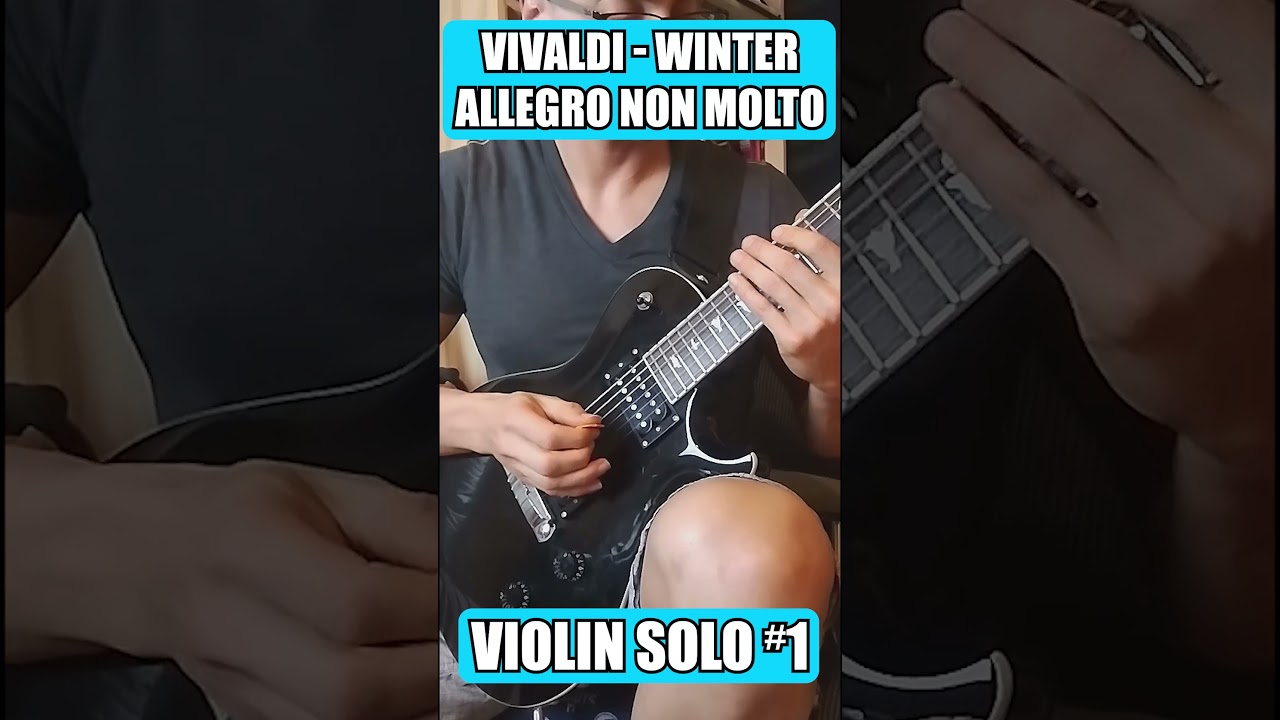
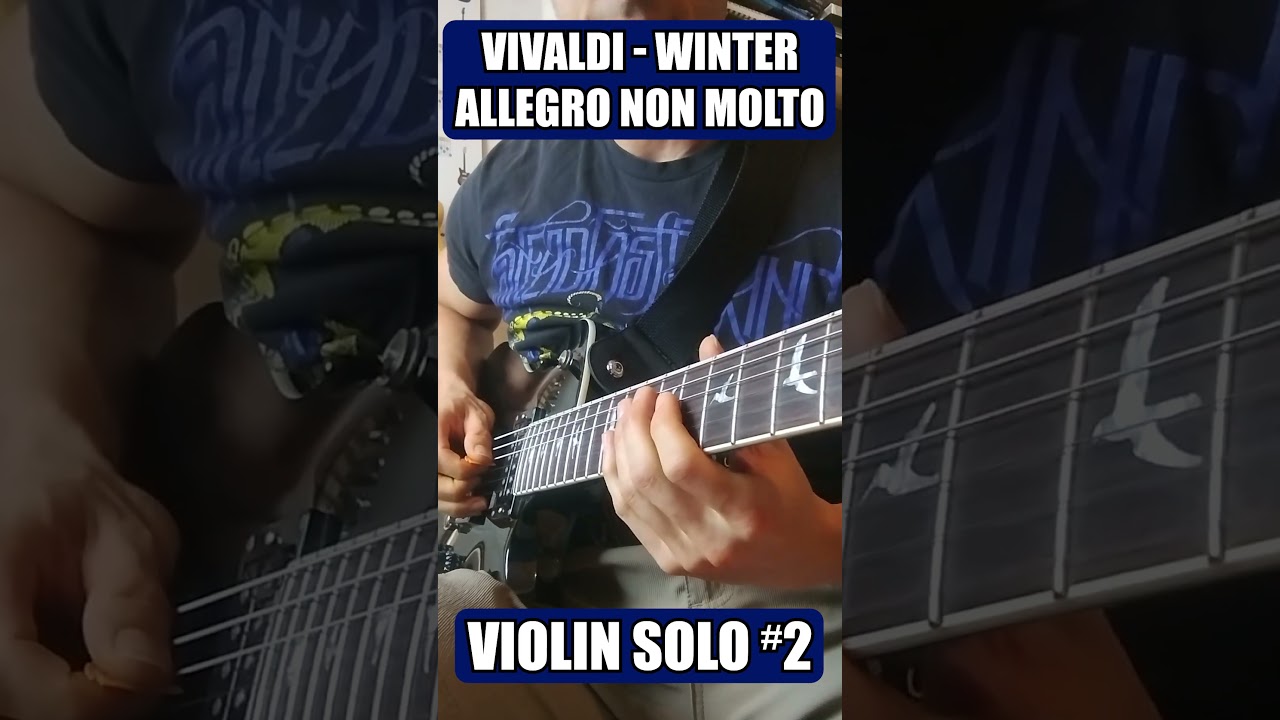
I haven’t recorded full playthrough of these, but I’ve done a couple shorts of the violin solos from Winter:
4 Likes
It’s very generous of you to share these - thank you.
2 Likes
Welp, there goes my Friday!
@Riffdiculous Always good to practice sight reading! It has helped me learned the fretboard/note names, and it so much more fun to make music than playing those learn the the fretboard game. in my humble opinion
3 Likes
@Riffdiculous These arrangements were ones I put together working from the original pieces; i.e. violin parts for Vivaldi stuff, and the cello parts (Bass clef  ) for the Prelude. I then tabbed them out for my students to work with once I had finished the arrangements. Definitely a great exercise to challenge your reading and fretboard awareness, but if the goal is technical development, that might create more resistance than is needed. Cheers and have fun with the pieces! G
1 Like


1 Like
At least it wasn’t alto!
Perhaps! But this is a forum dedicated to the great variety of picking techniques which exist, which have their different strengths and weaknesses. By using the notation to create your own fingering and picking directions, you can customize it to suit your technique. For those who cannot read the notation, they are at the mercy of someone else’s interpretation, more or less.
That said, I fully understand this would be a major hurdle for many, I just think it’s worth it to surmount the hurdle, or know how to do so, at least.
1 Like
That would happen to anyone who doesn’t know the neck regardless of whether they can read notation. On the contrary, I’d dare say it is more likely for a person reading notation to adhere to the paper as the only source of truth. I mean, some people get yelled at in classical guitar school for trying to find alternative fingerings and “disrespecting” the author.
Thus far everything discussed in this thread was not written for guitar…
That has nothing to do with my comment but anyway, I’m just challenging the misleading assumption that reading notation somehow gives you more knowledge of where the notes are on a fretboard.
You brought up “classical guitar school”, where almost all of the music studied would be written for guitar. It’s strict, and there is a technically proper way to play the piece.
Arranging a cello or violin piece for guitar is not the same at all - you can’t have “an alternative fingering”, they are all going to be alternative. lol If you are using a tab version of such a piece, someone else read the notation and translated it into tab first.
If people don’t want to learn to read, that is totally a-ok by me, but it would only empower you.