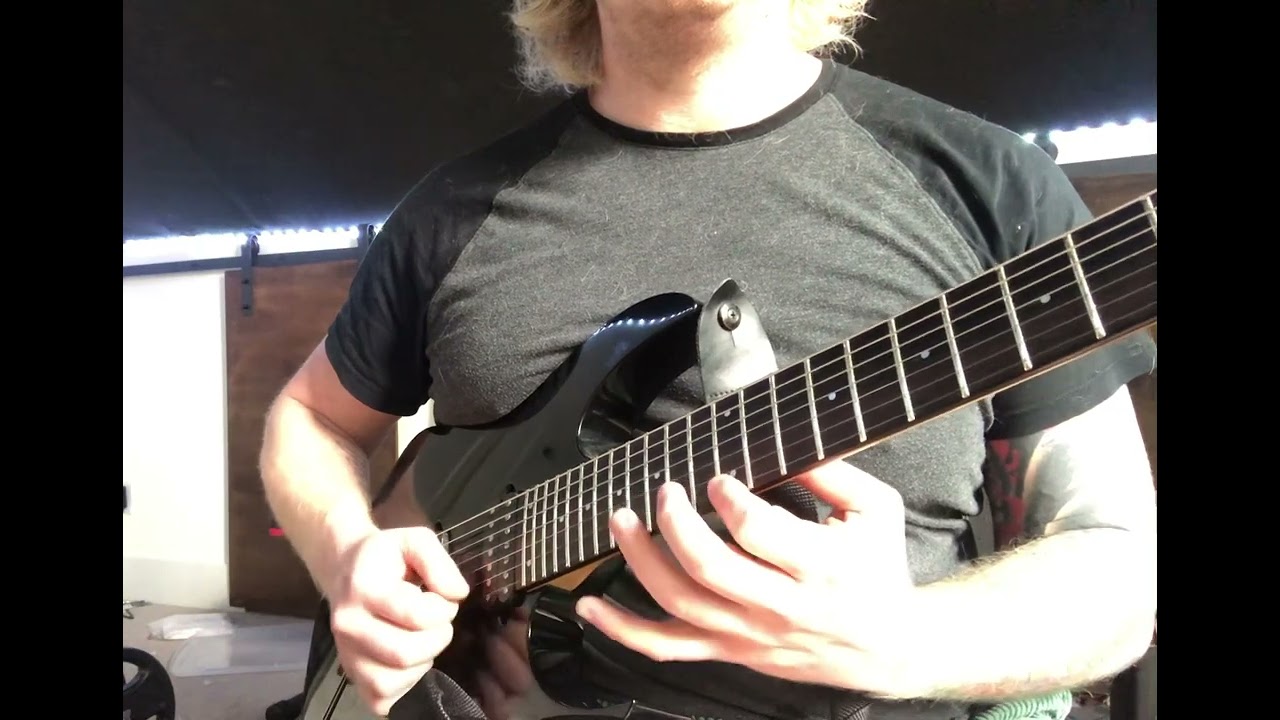
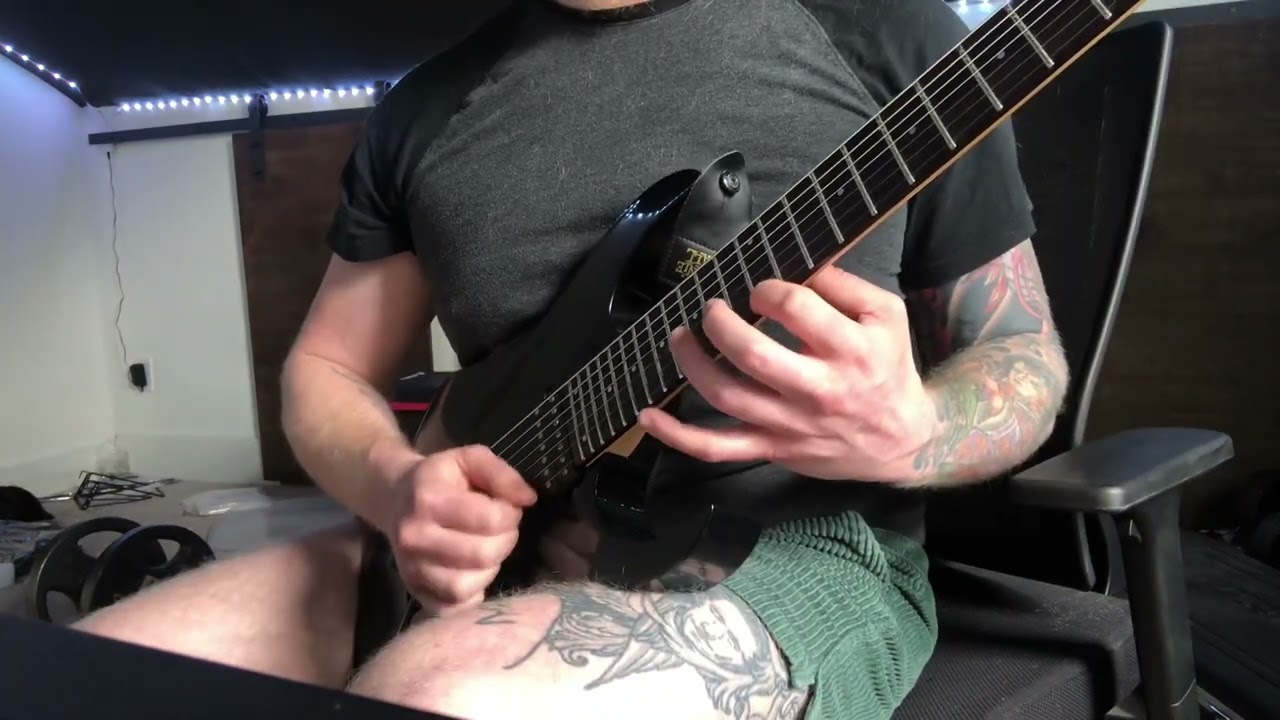
Small note. I also preferred the Eric Johnson jazz 3’s for years, but i now find that a larger pick works better for 902 style crosspicking.
Something about having the larger shoulders and feeling more stable in my hand. This is mostly speculation, but I do notice that crosspickers are more likely to be found with larger picks.
There actually is a click at 175 BPM in the background but my dog was weirdly barking along with it lol.
The goal, big picture, is to be able to choose whether I want to pick a line with any number of notes across any number of strings, or play it economy/sweeping so I have a whole range of dynamics and ways to approach it. Or I could play it with multi-finger tapping, but that’s something I’m fairly comfortable with.
A big reason for this goal is, my writing tends to have a lot of implied string skips and one note per string portions at moderate tempo - I tend to think in intervals a lot, and compose almost more like I’m writing for keys, or even if I write physically on guitar, I often want to embellish in ways that make the playing quite difficult with limited options aside from sweeping/economy plus string skips, which works - but I often like the staccato sound more than legato for heavier pieces. Although I do enjoy nice tapping sections, but often when it’s the only option because it’s gone too far the way of a keyboard composition.
EDIT: For example I wrote this theme yesterday, in the past I would have probably shied away from something like this, I’ve figured out how to do it but changing directions on a single note when sweeping is annoying and I can pick this at speed now.
This is something I’ve been trying, and weirdly enough it comes in phases - I think finding the motion was easier with the larger picks, but honing it is nice with my go-to 1MM Primetone Jazz 3s.
When I practice I have about several different picks I cycle through. My practice style is very ADHD, probably because I have ADHD, but I’m very stubborn and obsessive. So the result is I try every single thing I can think of to try, get frustrated and switch gears easily, eventually make something work but still forever bounce between ideas to check if something else might start working better.
Which it turns out works pretty well, it’s basically an evolutionary algorithm where I focus increasing amounts of time on stuff that’s working, but periodically jump to something different to try out, or am reminded of some piece of advice I forgot to incorporate or test out.
So I have in front of me - a
1 mm Jazz 3 standard
1 mm Jazz 3 primetone with more rounded edges
1 and 1.25 mm JP Signature jazz 3 primetone with sharper edges
JP signature tri-tip which is wider and I like a lot for getting the motion down
@cmcgee11235 when you use this motion for EJ pentatonic type stuff, how does it turn out for you? Ive been struggling with descending pentatonic 5 starting on the high E. Ive even made my own lick:
15 - 12 (high E) 15 (B) 12-12 (high E) 15-12 (B) and it’s been brutal to try to get down all alternate picked. I dont think I would play it live all alternate picked and would def use economy or pull offs, but i might change my mind if my alternate picking gets stronger. It’s just a fun mindless practice lick for now. Be curious to see a video of you trying it cuz youve been killing it. I also took a couple days off from guitar so coming back has been a bit sloppy lol
Hey I can try it out - how fast are you able to do it currently? Also are you trying to turn it into a whole descending all the strings run or just that one lick?
That is a tongue twister for the fingers haha! It has several things that make it challenging
-when cycling it, you always start on a different direction pick stroke than the previous rep
-inside and outside changes (which flip every rep, same as the reason above)
-double picked note can mess with our hand sync
-It is 7’s. I can’t remember the last time I played 7’s other than some Rusty Cooley licks
Thats my weakness is my brain always finds the hard things to play right away! Im trying to include this lick in a solo for a cover song and its very hard. Like i said ill prob use legato but its a great humbling alt picking drill that i cant get down yet
Edit: so if i can nail this lick down ill change my name to CarranoCooley !!
I would probably move the second E note (first of the double) to the 17th fret on the B string, and use the picking sequence
down, up, down, up, middle, down, up
It makes the coordination naturally repeat in 7s and creates a distinct fretting action for each distinct picking action, assisting with synchronization.
That’s fair, I was taking it as a specific challenge to pick the sequence without alteration. I agree that pattern would be better in practice - Jeff Loomis does that about quite a bit to introduce double notes in his alternate picking runs.
This way we at least always start on a downstroke, and can keep it USX
Right, this is “Betcha Can’t Play This”, Tom and I are going for “Betcha Can Play This” lol
I love Tom’s idea about keeping those repeated high E’s on different strings. Maybe a compromise that still requires DBX is to do that fingering suggestion and keep it all alternate picking
While we’re looking at alternatives - here’s a cool sounding 7 note pattern lick I got from misreading the lick earlier and extended. Closer to EJ fives but with an added 2 note pattern.
That is cool. I was messing with some 3nps pentatonic patterns the other day and deliberately adding in diatonic notes or chromatic passing tones to avoid the naturally occurring unison that happens when crossing strings. Maybe I should embrace it. Might make for some neat rhythmically displaced phrases.
Here’s another one I got by transforming from 7 notes to 8 by adding a last high E then transposing it down the stings, then inverting the pattern to ascend back up
The unison which can appear between the G and B strings when playing 3nps scales is also fully integral in Allan Holdsowrth’s playing, and in Shawn Lane’s.
It’s actually something I’ve come to appreciate more over time. The appearance of the unison break a melodic pattern, making it sound a little less cliché and predictable. If a pattern is played somewhat slowly it just sounds like a mistake, but at speed it’s a really cool effect.