(Hopefully this hasn’t been posted before; if so, my apologies.)


(Hopefully this hasn’t been posted before; if so, my apologies.)
And does she use a metronome? Let’s see…
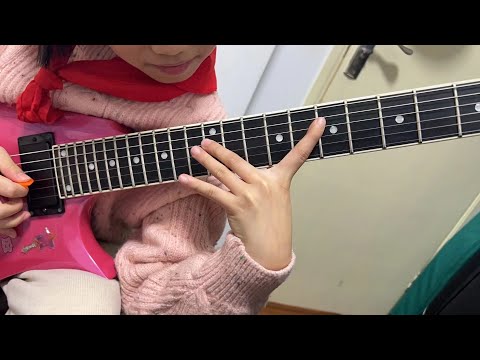
High-speed motion reverts to elbow:
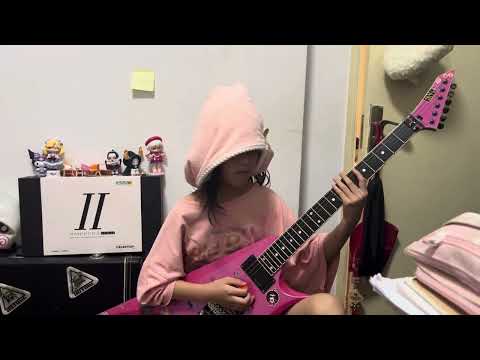
I think there’s an important discussion to be had here. However, I’m quite hesitant to write this comment.
Let me say clearly and unambiguously that I think this is awesome playing, and it is not my intention to discredit or diminish it in anyway. If I’m not careful in how I write this comment, I could easily come across as a grown man making a pathetic attempt to denigrate the (obviously excellent) playing of an eight year old girl.
My intention in writing this comment (as with every contribution I make here) is to be informative. Some adult players are often heavily discouraged when they see young children and teenagers achieve results like these. They take videos such as these of evidence that they are somehow deficient, and conclude that they could not possibly achieve such results. My hope is that this comment may help to prevent that to some degree.
With that said, let’s get into it.
Watch this video at 0.25x or 0.35x speed. Ask yourself if you’re really hearing six notes in each beat. I’m not, because it’s not happening. This is not sextuplets at 230 bpm.
She’s in good company here. Watch this video of Rusty Cooley:

This is one of the most absurd and impressive things I have ever seen on a guitar. Slow it down to 0.25x speed, and listen carefully. Again, what is actually happens is not what is intended (as in the demonstration).
It’s not happening, but it doesn’t matter.
The reason that situation like this occur is very simple. At these speeds, the the performer simply cannot accurately determine whether they’re really “doing it.” There is insufficient sensory-motor feedback to accurately self-assess.
This is the same reason why movements like swiping, pickstroke displacement, or mismatches between picking and fretting actions (see the Marshall Harrison and Rusty Cooley interviews) occur at high speeds. These aren’t really “errors”, they’re unconscious movement optimisations. This is how the sensory-motor system is adapted to function.
It is impossible for the performer or the listener to determine that what is being played is not what is intended when playing slow. These kinds of speeds are textural, not melodic. The intent is to make an impressive sounding fast noise, and Xiao Yu and Rusty Cooley both succeed fantastically well in that goal.
I am impressed. I am much more impressed by these clips than I am by any clip of playing that is artificially sped up, or where the playing is mimed over edited audio. This is real.
Yes, she’s using a metronome. However, this must be stated clearly.
This does not, in any way, support the idea of “starting slow” with a metronome and gradually increasing tempo. In fact, it is very much the opposite.
Again, slow down the fast playing. Watch and listen carefully. Throughout, we see and hear clear differences between what is performed and what is intended. We are not seeing the result of slow, accurate playing that has been gradually sped up. We are seeing movement patterns that are optimized for faster tempos. If this were not the case, the picking movement would not change at the higher tempos.
This is called bifurcation. As the speed increases, the movement patterns change abruptly. The purpose of the metronome is not to allow a gradual increase in the speed of the slower movement solution, the purpose of the metronome is to provide an external stimulus which creates the necessity for the new movement solution and encourages it to emerge.
We cannot train the nervous system through a simple linear progression. It is simply not possible to develop speed by starting slow with a metronome and by gradually increasing the tempo by some increment (5 bpm, or whatever) while focusing on accuracy.
I’m not arguing against metronomes. It’s an excellent tool for developing timing and rhythm when used appropriately. Rhythm is absolutely central in fast playing, and a metronome provides an external rhythmic stimulus.
However, if used inappropriately, the classic approach of metronome work can be extremely detrimental. By starting slow and insisting on accuracy, we create conditions which reinforce the suboptimal movement solutions, and we actively discourage bifurcations.
Even great players who advocate for the use of metronomes, such as John Taylor @milehighshred , demonstrate different movement patterns at different tempos, and become susceptible to the inevitable differences between fast execution and slower intention.
Actually, I have a lot of respect for John Taylor in this regard. When confronted with the fact that his real speeds were not what he had believed them to be, he promptly removed all mention of his Guinness World Record and related information from his website and promotional material. I think that demonstrates strong character.
If a player wants to achieve the kinds of speeds we see from Xiao, or Rusty, or John, then they need to allow themselves to explore the movement solutions that these players use. We cannot hold ourselves to impossible standards. We need to acknowledge that what we’re seeing represents human performance rather than something supernatural. We need to allow ourselves to be imperfect, and we need to value the imperfection of others.
I genuinely believe that the pressure to “be perfect” has been a major contributor to the very prevalent (and now very well exposed) phenomena of players on YouTube, Instagram and TikTok faking it. For me, the results have always been weird and somewhat unsettling rather than impressive, like the “uncanny valley” in animation or AI video.
Thanks for the awesome commentary, @Tom_Gilroy. What I love about players like Xiao Yu is that she is the opposite of being self-taught; this is a lot of talent, great teachers (her father taught her at first, and then she got a new teacher, presumably more advanced), and a lot of homework. In many ways, it’s not magic, one can regularly see it at, say, piano competitions.
I see a lot of people wed themselves to being self-taught, and then they wonder, “why am I not playing like my favorite artists?” Perhaps a teacher is the secret? I don’t know, but that would be my bet. There is a reason so many people go to conservatory, after all… (That said, a few can teach themselves! I’m just not sure how common they are.)
Regarding the metronome, it is heavily used in certain types of education, so it might make sense for those purposes, whatever they may be.
I’m not self taught either.
My father is an excellent drummer, but he’s also an award winning singer-songwriter. He writes with the guitar and plays enough to accompany himself. He taught me the basic chords and my first few songs, but he insisted I take lessons after a few months.
I was very fortunate, I had an excellent teacher. I took lessons with him for many years. In later years, his role was more like a guitar coach or advisor.
At this stage of my life, I’ve learned more about music and the guitar by myself than I have from any formal teaching, but that has all built upon the foundation of what I was taught by my teacher and my father.
Perfect, the efficient path! And some smart students will start with you as a foundation, and so it will go, until the guitar will eventually become a mature instrument like the piano or violin, where I presume there isn’t much (anything?) unknown to discover involving technique.
Guitar culture is negatively impacted by the deeply rooted idea that taking an academic approach is not rock n roll and guitar skills are supposed to magically happen because that’s how they did it in Seattle or whatever.
Personally, I have never seen a graduate from a guitar program that’s not an absolute beast at the instrument. Proper education always makes a difference and is never negative.
I graduated from New England Conservatory with a 4 year degree in Jazz Bass. I could sort of play when I left but I definitely could not shred. There were worse players in my program.
Sometimes we’d interact with players from Berkley and some of those people couldn’t play at all.
It’s a correlation doesn’t equal causation thing: a lot of people go to conservatory or music school. Some of them become great pro players, other people become nurses. Just because you see a great player that went to music school, doesn’t mean that all the players that went to music school were great, and it doesn’t mean that that player wouldn’t be great if he’d gone a non-academic path. A lot of the players that left school playing amazing came in playing pretty damn well.
I’ve learned more from online stuff then I did in school. This was back in 93-97 and I think in general jazz education has evolved in some mostly positive ways but a lot of the ways I was taught were kinda dumb.
And also, formerly famous, now has-been teachers losing their shit in lessons and crying and freaking out didn’t help anything.
I wish I could go back NOW though, man. That would be awesome. Or in like 2 years. I would kill it.
Music school is pretty dumb though. I think for what I want to do, 5 solid hours of practice would be getting there. 6 would be perfect. And then playing a lot in groups and performing. But as an undergraduate, I’m supposed to get 6 hours of practice in while taking some bullshit english class to pretend I’m getting a real bachelor’s degree? Nah. I am glad I got some liberal arts education so I’m not a complete doofus but ultimately it took away from what I should have been doing.
I was in the wrong place at the wrong time, but the place was slightly stupid. Music school is mostly for networking and playing in groups. The crowd that came after me ended up being semi famous (Crooked Still/Aoife O’Donovan and some others) but I think it was mostly that a bunch of great creative musicians showed up and they all went at it.
2 things:
Playing with people has been a HUGE boon for my technique even though the band I’ve joined doesn’t really do Tech Stuff. I think it’s the emphasis on rhythmic feel.
I get more mileage these days out of my bullshit liberal arts degree than my physics Ph.D. And I work in tech; I’m ostensibly a programmer.
The most famous Berklee alumni barely went there (Steve Vai and John Petrucci off the top of my head). Both did a year at most.
Wow, I had no idea! What kind of physics? Do you have any concerns about AI eating the programming jobs? I have many such concerns (and not just for programming)…
Condensed matter physics.
WRT LLMs: Being literate and able to clearly describe a problem (and the solution you want) is more important than ever. I think the tool (at least the good ones – Claude Code rather than GPT or  Grok) is a force multiplier. Someone described it as an “information forklift.” You lift large boxes with it, you don’t do delicate scrollwork with it.
Thank you for sharing your experience. I never went to music school so my impression of most graduates I’ve met only comes from the outside but is overwhelmingly positive, even “the nurses with a music degree” I’ve come across had fantastic chops. I never met the bad players from their generation so perhaps only the ones I’ve met continued playing.
Furthermore, by education, I mean any form of qualified tutoring. Even Technique Critique is a great example of that. I guess my point is that trying to fight music on your own does not sound like an efficient use of time, whereas learning from others might give you the metacognitive tools to determine what’s best for you and even determine wether the education you took had any value to begin with.
When you’re trying on your own without prior knowledge, everything looks the same because you don’t know where the goal post is, which leads to string hopping.
there were plenty of great players I graduated with. If I’d stuck with playing the bass the way I was playing it and had been a bit more centered and less idealistic and just slightly mental I would potentially have been able to advance with it.
That said it’s a super hard life and I wasn’t really prepared for that.
Just going to say that there are a multitude of amazing musicians in the world who are “self taughtish” to some greater or lesser degree. It is easy to forget that there was a time when teaching resources were very limited. Or none existent. People learned to improvise jazz BEFORE JAZZ EVEN EXISTED (think about that…a musical style doesn’t even exist and then you just create it, but it is hard for people to learn how to do more than 100 years later, even after people have analyzed what they did in every possible way).
Teaching and lessons and learning are all cool and important but plenty of people made something from nothing. I’m not one of those people, but at this point I don’t have “a teacher”, I have a lot of people I’m drawing ideas from and hopefully I’m getting better. But I don’t know…who was Jeff Beck’s teacher? Who was Peter Green’s teacher or Charlie Christian’s teacher? A lot of people had teachers, I’m sure, and I think the state of music education was really high in the mid 1900s in certain places (so many amazing black musicians coming out of Philly and Detroit…I think a lot of them coming out of a public school system that must have been pretty great for music). But I think the lessons a lot of them got were how to play their instruments well, not how to be creative. That does get to your point, and guitar I think might have some particularly weird barriers towards playing fast that say, saxophone doesn’t have. But regardless, plenty of people have figured it out in ignorance or isolation, at least I think so…
Robert Johnson (allegedly) had a teacher and he was not the devil.  Folk music can be taught as well, no matter how ground-breaking and that doesn’t make it any less legit.
About bebop, I do love Fareed Haque’s interpretation of it as folk that we buried in theory after the fact and that made it difficult. I have one of his videos and he calls his scales things like “Fareed’s scale that sounds good over Cm”. The approach to teaching also plays a role in how beneficial that can be.
Finally, I don’t see a lot of value in rejecting knowledge if you have access to it. If you don ‘t, well, what can you do.