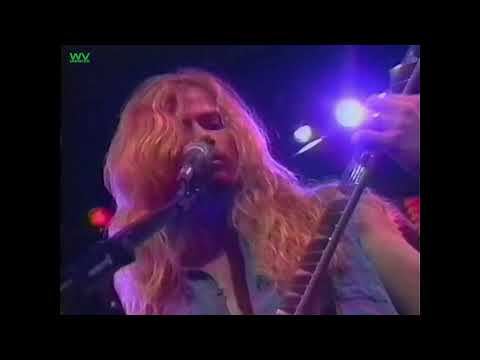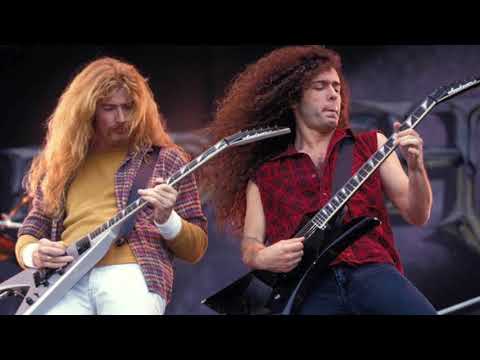
How do you think Marty Friedman play this lick?

From what I understand, Marty doesn’t play upward sweeps (high to low). With this in mind, how do you think he would have played this lick in Valley of Eternity?

I found a video on Youtube with some tab and it was transcribed like this:
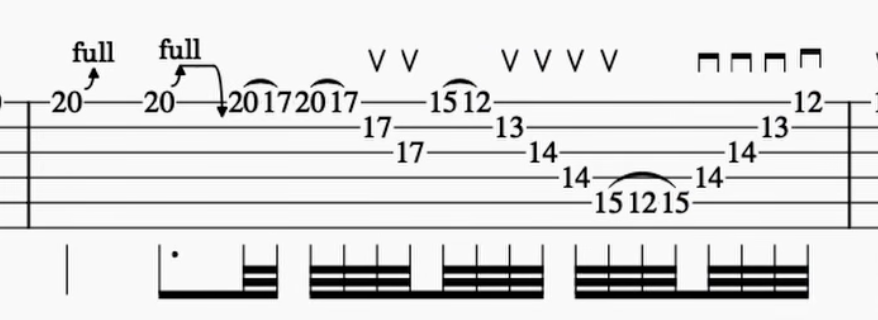
The tab sounds reasonably accurate to me. Perhaps he would have played it with an upward sweep, or would he have played some other kind of fingering?

The lick happens around 3:19
There is a similar lick in Symphony of Destruction -
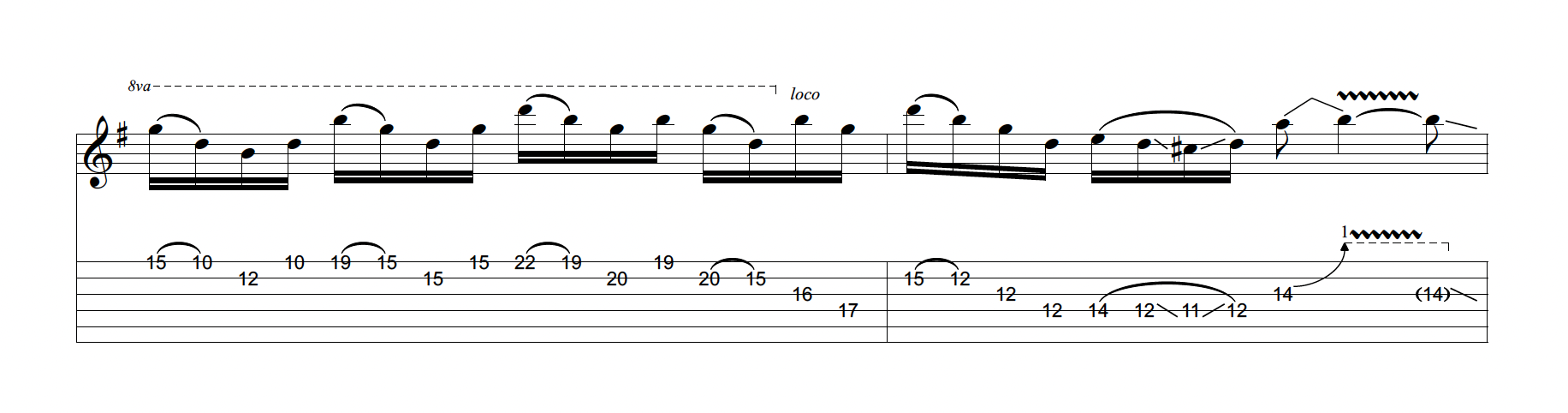
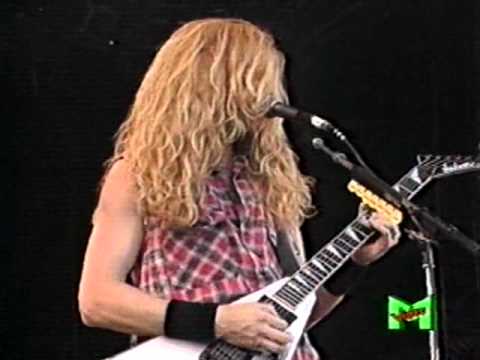
Well, here’s a clear shot of what he does in Symphony from a '92 performance:

He uses some double downstrokes to get from a higher string to a lower one, accomplished by having some push and pull with the rhythm.

Even better, here he is playing a 4 string “sweep” in Hangar 18:

And finally that same Hangar 18 bit, isolated from the studio recording:

He’s definitely using all downstrokes for the descending parts, which of course causes them to lag slightly, and then he rushes the ascending sweeps to catch up. So, he’s almost definitely doing that in your original example, though perhaps with a different fingering.

2 Likes

To be honest, I never thought of checking live footage :joy:. It’s impressive that he can do descending sweeps with all downstrokes. I wonder if he did the same for any Cacophony passages that required descending sweeps? I’m not that familiar with Cacophony’s music, but I do know that Jason Becker played a lot of sweeps, so I’m sure there are some doubled descending runs in there.
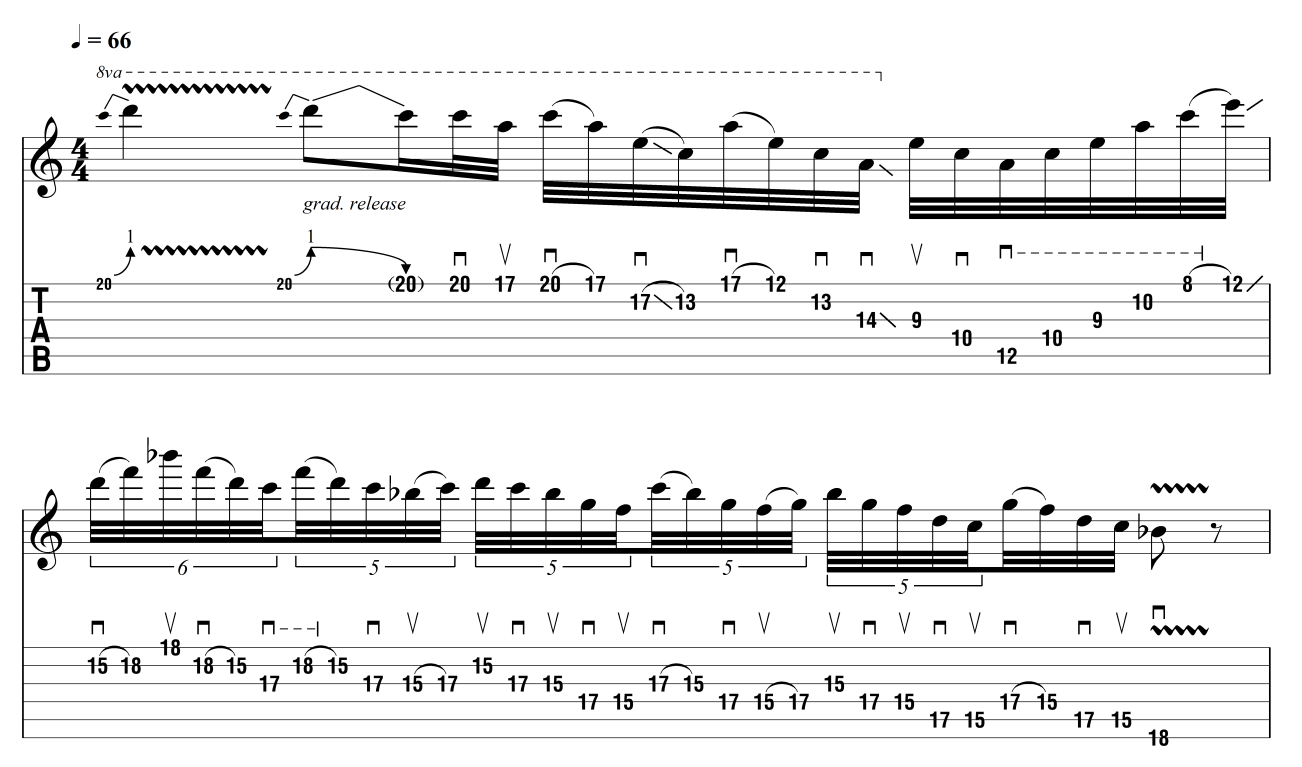
You’re right about the ascending sweeps being rushed to catch up - I had never noticed that detail about his playing, or even thought about it!

1 Like

Can you expound upon this? Why do they have to lag?

Consecutive downstrokes going in the “wrong” direction, descending rather than ascending, require a constant motion of reversal so that they’ll even work. For example, you play a downstroke on high E, you need to reposition to play a downstroke on B, play the downstroke on B, you need to reposition to play a downstroke on G, et cetera. This is opposed to using all downstrokes to ascend, in Marty’s case with a downward pickslant, which consistently puts the pick in an advantageous position. The ascending portion flows easily, the descending portion is “hoppy”.

Just listen to him play the isolated Hangar 18 arpeggio I linked, at reduced playback speed. What is typically transcribed as 16th notes is imbalanced, the ascending part faster than the descending. This isn’t on purpose for musical reasons, this is because of how his technique functions: he couldn’t play it perfectly evenly. And I mean that as no slight against him, Marty is awesome.

3 Likes

In fact, I think that these sorts of quirks help give someone their unique sound.

2 Likes

(Maybe downstroke on the first g9 actually, but an upstroke is within Marty picking ‘rules’ and easier IMO.)

3 Likes

Aha! He is avoiding “garage spikes” with an expensive circular motion!

Not entirely: his upstroke motion is such that it always pulls away from the strings, and he’d have to make a different motion entirely for garage spikes to happen. He likely doesn’t train that motion (why would he when it doesn’t work with the rest of his technique), and so uses a motion he definitely does train: consecutive downstrokes.

1 Like

Right, he invented this expensive circular motion as otherwise he’d be bitten by garage spikes. In other words, he sweeps with an efficient motion ascending, and he has a surprising (to me) work-around to go in the other direction. Is that right? Or am I confused by terms that I have to interpret like “upward,” “high to low,” “higher string,” and “lower string,” and “push and pull with the rhythm.” Sorry for my confusion.

You can’t assume this. Right now his upstrokes move in a direction that pulls away from the strings, but that is because of the motion. Maybe he physically cannot move his hand in an upstroke sweep kind of direction at all from his general setup - if you divorce the muscular action going on from the pickslant, sure, it would cause garage spikes, but it seems likely to me that he simply can’t move his hand that way. However, if he were to change his setup so that an upstroke sweep movement was possible, it would probably also alter the pickslant, and then maybe it would work, no garage spikes.

Why doesn’t he do this? Something about his typical form feels good to him, so he makes what he plays fit to it. Being a master technician and a musical virtuoso are not the same thing, and indeed most all of the musical virtuosi in electric guitar are not really, truly master technicians, capable of playing anything with any technique, but they are masters of themselves, free to express whatever they want on the instrument.

1 Like

Thank you for the tab. I never thought about moving down the neck rather than staying in one position!

1 Like

I think they’re saying that consecutive downstrokes are better than upstroke sweeping because the latter will become impossible due to garage spikes with Marty’s form. It seems plausible to me, but Marty definitely just does it by feel.

2 Likes

Right, I totally get what KGK means, and admit I’m perhaps being a little difficult. lol My point is that, yes, the pick is slanted in such a way that garage spikes would happen if it were possible to do an upstroke sweeping motion, but I don’t think Marty could physically even move his hand that way from the supinated, flexed “Marty position”, and I don’t think this is merely due to pick attack.

1 Like

I’ve dissected enough Marty stuff to tell you that he never sweeps with an upstroke. He does only downstroke rake type sweeps but can do them very fast. He’ll basically rake and has a mechanic where he does a super extended escape to get back to the top of the arpeggio. This is most likely what he’s doing here.

Marty’s picking hand is essentially a locked USX position. Instead of tilting his hand or adjusting his escape path, he has his picking hand at almost a 50-60 degree tilt towards the floor which makes it impossible to do anything but USX.