'Modern' Metronome Use

I’ll stick to the point. Playing with the metronome on 2+4 in and of itself doesn’t necessarily fix your rhythm, you can play deeply out of time with a sloppy grid and still maintain a connection with the metronome.

I would say it’s pretty hard to do stuff like play with the metronome only on 4 or only on 2 every other measure with a really slow metronome and consistently hit it on time with bad time or a sloppy grid.

2+4 is pretty easy though, sort of a party trick.

I should say the reason I feel strongly about this is I spent a lot of time playing with the metronome on 2+4 and thought that because I could, it meant my time was pretty good. My time was not very good at all and very inconsistent. Ultimately it gave me false confidence.

2 Likes

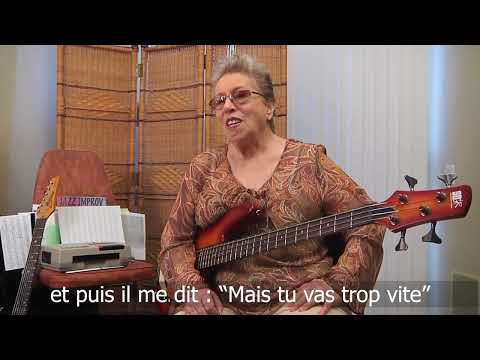
(Video in English with French subtitles)

While there are some exercises using a metronome that can be useful, there is a lot to rhythm and having good rhythmic feel and good time beyond the metronome. The “RHYTHMIC DEVELOPMENT and PERFORMANCE IN 4/4” volume (3rd volume of the rhythm book series), discusses “hide the metronome” exercises which are perhaps the best (the book also discusses non-metronomic time in various feels). I have often seen discussions e.g. on facebook, in which someone writes “rhythm is important” and then all the answers are about playing with a metronome - it strikes me as parallel to someone saying “melody and pitch are important” and then everyone replying “yes, i use a tuning fork” - it simply misses almost all of the topic. Caveat: if you are only using a metronome to measure how fast you can play 16th notes, this post is irrelevant to you(!). Regarding a couple other things people posted: if you are playing any kind of Afro-centric music (i.e. anything that has roots in African rhythm, with steady pulse and groove - jazz, funk, rock, Brazilian, Afro-cuban, hip-hop, reggae, etc.), classical music is not the place to look for this. I also smiled that steve506 posted a Carol Kaye video, since I used to play in her band - she is 91 years old and still posting on the internet! I know many here may not be interested in getting into rhythm deeply, but if you are, I suggest you check out therhythmbooks.com (the series has more than 2,000 supporting mp3s online, as well). For those who are only interested in metronomes, try “hide the metronome” exercises.

2 Likes

Woah! Was that experience as surreal as it sounds? Cause we’re talking legendary levels of cool now.

Also, I appreciate the book recommendations. Right now, I am getting into a rhythm rabbit hole and that’s the kind of content that I’ve been finding most fascinating these days.

There’s an ebook available on Kindle (and a video series freely available on youtube) by a guy who made his own metronome app called Bounce Metronome, and the stuff he discusses is excellent - he starts with the “hide the metronome” concept, but also starts bringing in things like trying to be able to consciously to choose to always be a little ahead of the metronome or a little behind it, how much you swing, etc.

I’m interested in looking at the development of rhythmic abilities in general, but the metronome is usually what people are told to do to start with, which is why I wanted to see if anyone’s looked at ways to use the metronome more intelligently than something as simple as “set the metronome to 2 and 4”, which has value but isn’t a panacea.

I need to get my hands on a copy of Dilla Time, because Dilla is great, and his use of “wonky” rhythms is amazing.

steve506 - it was definitely fun to perform with Carol and to hang out with her. There was only one thing that was perhaps a bit “surreal”: she was a guitarist before she became a bassist, and wanted to play a couple of pieces on my guitar in her quartet, while having me play electric bass. I do not claim to be a bassist, so playing electric bass behind her was … well “surreal” isn’t a bad word to describe it (!)

Also, steve506 - would love to hear your experience and progress if you work with that rhythm book series!

ShadowoftheSun - “Hide the metronome” idea has been around for a while - the drummer in one of my earlier quartets (Ari Hoenig) is another person who teaches it. Of course, playing behind and ahead of the beat are good skills, though doing that only with a metronome may not be the most musical way to get there (even playalong tracks, for all their shortcomings, could be useful here, as is transcribing solos by masters of this and learning to phrase exactly as they do). And yes, J Dilla’s work is very worth cfhecking out: especially in music that had been very drum machine/quantized/mechanical-ish, his selective non-metronomic placement of certain rhythmic hits in the drum parts was so innovative and influential.

3 Likes

I wholeheartedly agree. While it serves a purpose, it doesn’t tell the whole story.

Personally, my rhythmic journey has led me to learn a couple drum grooves on my beloved electronic drumkit and it’s been really fun to, well, learning what my own natural groove is, whatever that means, so I’m kind of jamming with myself and have come across some interesting nuances here and there that make my playing experience richer (for lack of a better word).

On top of that, well, experience has shown me that people in my social circle are more impressed by a basic drum groove with a sneaky syncopation than all the shred in the world, which is funny and sad for me as a devoted guitarist. I guess we humans are naturally attracted to danceable sounds.

1 Like

I don’t think I have the greatest sense of precice timing… but I’m definitely getting better. A few thoughts on what’s helped me:

I find playing to drum loops a lot easier, and probably more useful, than playing to metronome clicks. Rather, I suppose, now I can play to both pretty easily, but when I was first starting on this stuff WAY back in the day it was a lot easier for me to play to a drum track… and to this day I’m more inclined to pull up a MIDI drum riff and practice/jam to that.

It’s silly, but… tapping your foot in time to your beat seems to help a LOT, and somehow bobbing my head to the groove seems to help even more. Moving in time to the groove you’re playing really helps your whole body lock in.

I guess those are about all I have to add.

4 Likes

If you can make it so that the music is something people can dance to, you can put more or less anything on top of that base and people will like it - Angine de Poitrine’s recent success is an excellent example of that.

While I agree with everyone that a metronome isn’t the most directly applicable way to practice rhythm, I figure that if I can’t play in time with a metronome, I won’t be able to play in time with anyone else either - a way to increase the floor of my musicality even if it doesn’t necessarily increase the ceiling, as it were.

Dear lord does “dancing” help, and there is really no (aesthetically) right or wrong way of doing it, as long as you just embrace the rhythm. It feels like a natural way of reducing “stiffness” in your playing.

4 Likes

Notable here is that I’m a horrible, very disinterested dancer. :rofl:

2 Likes

Just do it like nobody’s watching! I mean, they will be watching so you better lay a super tight groove to make up for it. :rofl:

————————
Can’t double post so here’s a beautiful clip of the 2 and 4 miraculously making an entire forum groovy halfway through a solo :grinning_face_with_smiling_eyes::

1 Like

https://www.youtube.com/shorts/D74DlvNdOfM

1 Like

I love Miles, but I am imagining a conversation between him and RFK Jr and kinda losing my mind at the thought.

1 Like

refusing to be caricatured, getting his point across AND managing to naturally interpolate Summertime into his answer, truly one of a kind

2 Likes