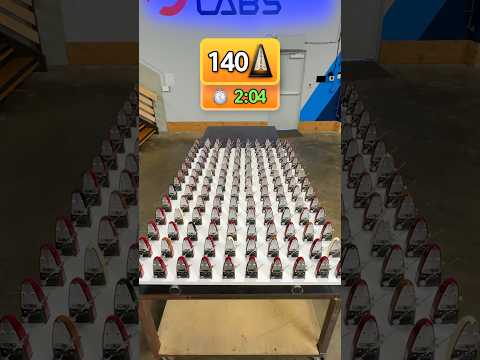
'Modern' Metronome Use

One of the major pieces of the CTC ethos is using actual scientific thinking with regards to guitar technique, and I really appreciate that. Is there a specific book or source that people know of that takes a similar approach to using the metronome for developing good time, not just for guitarists, but for musicians in general?

I’ve seen a few sources saying that every person who has good time musically is creating their own pulse internally and then synchronizing that pulse with the pulse of the band, which I think is a much more sensible way to express the nature of using the metronome to help your ability to play in time than the typical way it’s discussed which is “use the metronome ==> ??? ==> have good time”
1 Like

Timing is a skill to develop, like anything else. Here are a couple of fun ideas to mess with:

I got this from pianist Charlie Tran: set your metronome in such a way that it is only playing beats 2 and 4. So, with a traditional metronome, if you were going to play at 140bpm, you’d set it for 70bpm, for example - with apps and such you could just mute beats 1 and 3. Then practice your improvisation or whatever you’re working on. You’ll be forced to feel where 1 and 3 are.

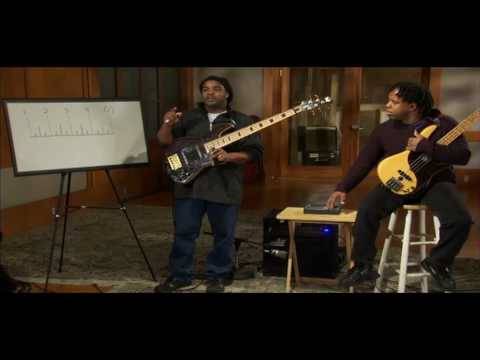
And this is a good, short video to watch which stresses the importance of having great command over subdivisions.

4 Likes

This is aspirational, leave hard science and things become mushy. Why not just copy what the classical teachers do and view that as established best practice?

The 2 and the 4 make you inevitably groovy. This is the way.

1 Like

Because there have been advances in neuroscience and in the entire methodology of how we learn to move? If I wanted the established best practice it’s right there, I agree, but that’s not what I want. I want to look at how we develop a sense of time and rhythm based on what the actual research says.

For one thing, because it conflicts with drumming pedagogy, and they know more about developing rhythm than everybody else by a considerable distance. Nobody knows more about connecting movement to time than drummers.

7 Likes

Just came to mind that this very forum exists in part because classical knowledge does not apply to everything.

2 Likes

I suspect the field is tiny and there are probably only a handful of researchers, so perhaps you might be able to contact one? That would be really cool!

This sounds like a good idea, one might be able to steal proven techniques from them. This is what I like, basically stealing established best practices and only turning to invention when strictly necessary.

Is there a good summary of how they view things that you might be able to share? I’d like to read it.

Well some instruments are fully established, like a violin. I recently learned that Mozart’s daddy wrote a book, Versuch einer gründlichen Violinschule (1756). Now, guitar pedagogy has been an absolute failure in comparison, but thankfully we have Troy to figure out a lot of things for us. I suspect that all of the guitar techniques are discovered and well understood by now, I guess it’s a question of somebody to integrate them and create a good educational system like, say, the classical pianists have done. They had giants like Bach writing educational material, the guitar world is so sad by comparison.

1 Like

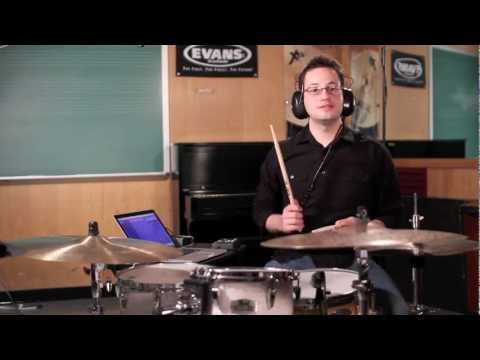
Some ideas here though it’s drum focused:

Another idea, and I can’t remember where I came across this or I’d link the original source, is that you need to build both your ability to set a pulse (i.e. drive the band) and your ability to follow a pulse (i.e. stay with the band) so what you want is a metronome that randomly drops in and out so you can work on both simultaneously (I use Timeguru for this, it allows you to set what percentage of clicks will disappear).

I also like setting it up as a regular metronome but every fourth bar is silent.

edit: Click only on upbeat 16ths is a good one as well, that may well be in the video I linked, I haven’t watched it for a while

I agree, and the fact that the “established knowledge” is factually wrong on many critical aspects does not help.

Back to the topic of time, metronome use, etc., I’m curious if classical rhythm has any insight into what is commonly known as groove ie. the manipulation of the beat besides labeling a passage as rubato.

1 Like

My personal take on the subject:

  1. learn your chunks independently of a click

  2. experiment with different ways to execute the same chunks in relation to a click (e.g. “straight” like exactly 1 chunk per click, or syncopated in different ways)

  3. record yourself and verify that you are really playing with the desired timing

Among other things, it’s super easy to think you are following a click when you actually aren’t (ask me how I know). If you don’t measure, you can spend 10 years doing metronome work and still not know that you are rushing, dragging or not following at all (again, ask me how I know).

2 Likes

Classical music is the last place I’d look for information about groove. Those concepts were developed from music meant for dancing. For me that means modern R&B and hip-hop, but your tastes may be different.

If you’re interested in groove theory and you haven’t read Dilla Time yet, I cant recommend it enough. Ethan Hein’s blog is probably something you might want to check out also.

Strange that something like GP8 or Logic doesn’t have a way to compare what it hears with the sheet music or TAB.

I am an extreme rhythm and time nerd and I have my students do a wide variety of things with the metronome.

The metronome is a tool that can be used to solve problems and build specific skills. It also can be irrelevant or even harmful depending on the objective of the specific practice activity.

I think this discussion is easier to have if we narrow down what specific thing we’re trying to accomplish in our practice. “Have good time” is very broad. For example, some people groove like hell but might not be precise in a metronomic way, while you can program a computer to have absolute perfect note durations but that’s usually not what we think of as a good rhythmic feel.

And that’s ONLY regarding the very broad concept of “good time.” There are lots of other things someone might be wanting to work on, for example being able to improvise with interesting rhythmic ideas but still have a strong sense of where beat 1/bar 1 is in a form, or being able to improvise along with other musicians that are doing complex rhythms but still be able to hold form, etc.

2 Likes

You definitely can play like shit with 2+4 on the metronome. I can show you.

It’s very helpful for many things but is not a cure all. It is good to understand that just because you’re playing with the metronome on 2+4 doesn’t mean you’re grooving. It also doesn’t necessarily translate into playing with real people who are not metronomic.

I definitely thought my time was pretty ok because I could play jazz tunes with the metronome on 2+4. It was Christiaan Van Hemert who listened to me and told me my time was really awful and that I couldn’t swing who sort of woke me up (he was totally right). Playing rhythms more “squarely swinging” (meaning playing in a sort of rigid long-short pattern) helped me lock in a lot of things. The Synchronicity course here was valuable as well.

I think my rhythm is a lot better, tbh not much of that is because of 2+4 on the metronome although that certainly is helpful.

2+4 on the metronome, recording yourself and then listening critically to how much you’re locked in with it is a good one. You can totally be playing along with the metronome and be out of time with it and not really know it. Are your notes really hitting with the clicks?

Like anything in life, it can be done wrong. I’m struggling to understand how come that disclaimer might have been necessary.

1 Like

well I’m quoting you “The 2 and the 4 make you inevitably groovy. This is the way.” Disclaimer comes because you are stating this like a fact, and I’m saying nope, there’s nothing inevitable about it. You can totally play out of time against 2+4 and have generally terrible rhythm. Just being able to play against 2+4 shows that you can play against 2+4 which is definitely harder than playing with the metronome on all 4 beats, but it isn’t a sort of check sum that shows that you have good rhythm in general.

It’s definitely useful but part of a larger rhythmical practice system. The thing that makes you groovy (I think) is playing without a metronome at all and keeping consistent time (recording yourself). Or at least, lets you know if you’re groovy.

I guess you take everything* literally. No problem, although it is** really hard to engage in conversation this way.

Imagine if someone tells me drinking water is the best favor I can do to my body and I reply with a rebuttal citing the dangers of drinking unholy amounts water or the implied dismissal of sleep, mental health nutrition and exercise.

Not “everything” as in every aspect of your life as I am confident*** you are familiar with figure of speech, hyperbole, and the difference between casual conversation, a scientific thesis, and declaring under oath.

**This is a guess based on empyrical evidence over a very limited sample as I don’t have the data of conversation dynamics for >6 billion people.

***Not really confident but just suspect it at best because I don’t know you.

Ok everyone, I think the relevant points on communication style have been made. Let’s stay on topic :wink:

2 Likes

Does this experiment reflect the positive effect of playing with others consistently? I mean, to what extent is grooving with other musicians an intellectual exercise and/or “just” physics?

That thing looks like witchcraft.

2 Likes