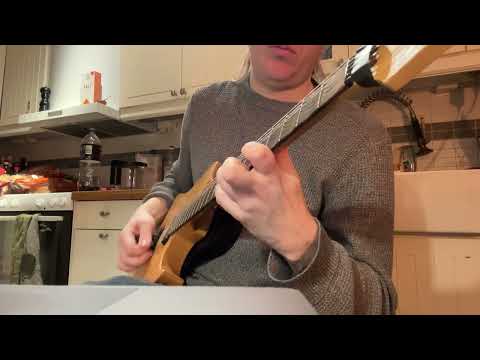
Trouble choosing a reliable picking motion (Forearm / USX / 200 BPM tremolo)

Hello guys,
I have a question regarding my picking technique. I’ve been trying for a couple of years to develop an efficient and reliable picking motion, but I’m still struggling to find one that really works for me in musical situations.

My goal:
I want to play USX phrases using a forearm + wrist blend (more or less), and be able to tremolo pick 16th notes at around 200 BPM. I don’t need more speed than that.

The problem:

Option 1 – Forearm rotation
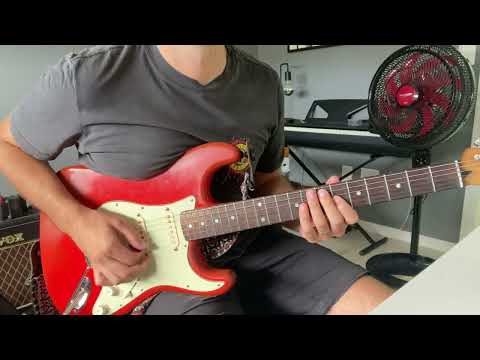
This motion looks great and feels effortless. I can do it all day with zero fatigue.
BUT I can’t sync it to a beat or synchronize it with my left hand. The motion always wants to stay at the same speed, around 230 BPM. It feels very strange to use musically — for example, in the middle of a song or while improvising.

When I’m playing live and standing up, it’s extremely hard to access this motion, no matter how much I practice. The motion itself feels very similar to Eddie Van Halen’s tremolo picking, and the speed is basically the same.
It feels almost like a spasm — fast and effortless, but not really under conscious control.
And theres is a jump where i can play at around 120bpm and then jumps direct do 230bpm, anything in the middle it’s possible

Option 2 – Wrist + forearm blend
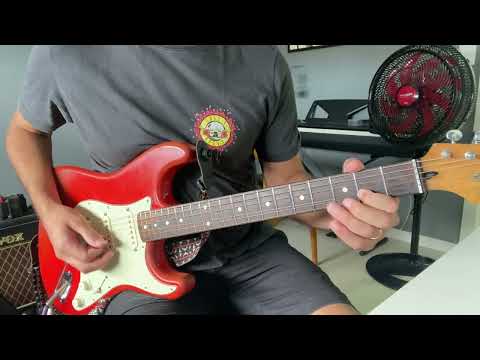
This motion feels very natural, like I’m just speeding up my regular picking. I can sync it to a click, recall it in the middle of phrases, and use it in real musical contexts without thinking.
However, it fatigues a bit, especially when I speed up, and I can’t go faster than 170–180 BPM 16th notes. No matter how I practice, I can’t reach a clean 200 BPM tremolo with this motion.

My question:
Has anyone dealt with a similar issue? I think players like @Qwertyguitar and @Jackl might use something similar, but in their videos the motion looks very blended, controlled, and musical — and they can clearly use it in real phrases.

Which movement should I pursue?
Is it realistic to push Option 2 to 200 BPM, or is there a way to gain more control over the forearm rotation from Option 1?

Thanks, guys!

1 Like

Sounds like you need to try to sync your forearm rotation-see core concepts of Synchronicity for more. For issue standing, have you tried making your guitar is in same position regardless of standing or sitting?

In fact, it doesn’t matter whether I’m standing or sitting. Sometimes I play live while sitting and I still can’t play properly. It feels like, in a musical situation, this movement becomes the opposite of my natural picking motion.

I would stick with CtC’s ethos: take the “easy win” to make progress and keep advancing. I think that’s either going back to tests to find motion or bring sync to forearm tremolo. Have you tried 3s patterns or Yngwie 6s with forearm? Have you really tried to go faster with FW blend? How’s fretting hand? Latest chapters in Synchronicity are all about testing and improving fretting hand.

If you want a certain motion and escape, cool, but make sure you are taking “easy wins,” as Tommo says. Take the easiest way for tremolo, sync, and/or string crossing so you have something instead of nothing. You can return later to learn new motion/escape.

Troy mentions in motions tutorial that you can practice any and all motions, why not. Just do not lose sight of looking for easy wins.

Go forth and shred!

1 Like

Something that helped me a lot was to try to slow down a motion that could go very fast, or slow, but didn’t seem to have a “middle ground.”

How I accomplished it was this:

  1. Put on a metronome at a slower speed than you can currently use that motion
  2. Try to use that motion to play a single-note tremolo, in time, with accents

This took many attempts and progress was not linear for me! I’m also not sure that the motion didn’t change somewhat along the way, but that’s okay because what I have now works well for me.

2 Likes

To Eric’s point, Primer and Synchronicity do state you may need to slow down a bit to place accents and start hand sync chunking

2 Likes

Thanks @AustinK and @eric_divers I’ll definitely check out Synchronicity.

And yes, I agree that following the easiest motion makes sense. My real issue is this trade-off:

Motion 1: Very fast, smooth, and effortless at high speed, but hard to access in real musical situations and almost impossible for me to sync to a beat.

Motion 2: Very easy to access in musical contexts and to stay locked to the time, but much harder to push beyond ~160 BPM, and almost impossible for me to reach a clean 200 BPM.

1 Like

You got speed, now let us get “synchronized!” as Tommo says in intro. Troy has cited in his forum responses that many feel that there is an “uncontrollable element” to elbow motion but, it can be synced (see Vinnie Moore). I’m not an expert but I do not see why your forearm motion can’t be synced. Can you change notes on a single string every measure, every other beat, every beat, every eighth? Start simple with fret hand while you tremolo then slowly, systematically add more difficulty

Any progress is a win, do not forget!

1 Like

Yes, I had almost exactly this problem for a while. Personal recommendation, in a vacuum, (only based on my own experience; I do not teach) is to work on making Motion 1 musical rather than to try to force Motion 2 to go faster.

However, the wrinkle is that if you can’t get your wrist-forearm blend to go faster than 160bpm, you’re likely doing wrist-forearm wrong in some way. Could be any number of things (pick attack and slant, anchors, ???), which I’m not really qualified to diagnose.

2 Likes

I concur with Eric, he is more succinct than me, but I am advocating for same thing-forearm sync is next step. Making musical in different ways will challenge your motor learning and can only help your development. Also, we (I’ll speak for everyone) are here for music not speed picking competitions

2 Likes

Thanks!!! Anyone else had experience this gap of speed between medium speed to fast?