
Where on CTC is DBX motion actually taught?

So I’m just going to start with saying I’m incredibly frustrated by the convoluted teaching method at CTC so please bear with me. I’m wondering if someone can help me. I know that string changes are the primary issue with my playing. I’ve been playing for 20 years. I always come here to try to fix it and I’ve never found out where this stuff is actually taught on this website (and no, it’s not the Pickslanting Primer (for me). I’ve watched that thing about 15 times and nowhere is it broken down how to execute these motions.)

I want to learn DBX motion because I am a natural DSX player, and according to Troy DBX is an extension of DSX. I still can’t find a single video where the DBX motion is actually explained - as in, how the hell do you actually do it? I know it’s a semi-circle, I know what it looks like, I know which players use it and when you use it, but I need to be told what to do to achieve the semi-circle. If I start with my normal DSX pick stroke and clear the string, and then want to come back up a string, what do I do with my wrist for it to be DBX and not string-hopping? I just keep hitting the string above me when crossing over unless I do this extreme angle (basically switching to USX for a bit) and I feel this makes me want to string hop. It doesn’t feel like a back and forth sort of motion when I’m playing at 160+ bpm with pure DSX.

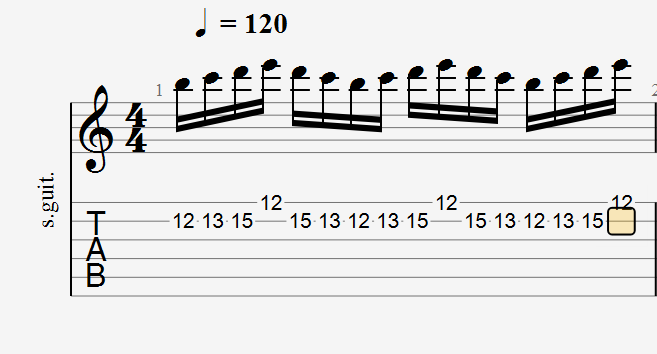
For example: let’s take the standard 3 note, 1 note Paul Gilbert lick I’m incredibly slow if I’m not thinking about it, and can hit around 110 bpm 16ths clean if I try to do what I THINK is DBX motion.

It’s unbelievable that there’s hundreds of hours of material on here, and nowhere is it concisely broken down how exactly to execute any of these motions. I need drills, I need to instruction on how to do the motion, not what it is or what it looks like. It’s sort of like learning to drive a car by reading an endless book, It’s just endless waffle to me. The only thing I’ve found is even mildly useful and concise are Synchronicity and Metronomic DSX. (The video in the Primer keeps going on and on about how most people do it subconsciously, how it’s also used in sweeping, how it can be hard to do, how it’s a bit DSX-y etc. and Troy just ripping through lines. I’ve watched it so many times I’ve lost count: Chapter 6 – When To Use DBX Form – Cracking the Code)
@Inabsentia I’m more or less on the mindset that DBX feels like controlled / well executed string hopping. My warmup incorporates some element of mindful string hopping at the very start.

Maybe lean into the feeling and see what happens!

A couple things:

“DBX” isn’t one thing. There are tons of different techniques out there. And I’m not sure there’s any guarantee all hand/finger types can even do them all. Martin Miller’s technique, for example. I’m not convinced my finger joints even do that.

Two, for the sake fo discussion, let’s narrow it down to one very specific technique: let’s say reverse dart wrist motion. I’m not sure there is any way to actually “teach” the wrist how to make a semicircular pickstroke motion. The big-picture method I think is likely how this is learned: assume the correct form, then attempt lines that need it. Use filming occasionally to see what is happening.

When I do this, I don’t even see a semicircular pickstroke on every note - only some notes, where it is necessary. In no way am I controlling this consciously and in no way did I learn this consciously. So whatever you think you’re seeing in phrases I have filmed, look again and see if you really see “DBX” or just “DBX some of the time when needed”.

So if your goal is to play phrases that sometimes require a semicircular pickstroke, aka “mixed escape” phrases (for lack of a better term), here are my best pieces of general advice:

Don’t worry about “DBX” as something that needs to happen “or else”. Very few phrases actually require a semicircular pickstroke on every single note. The fact that some players actually do this (Molly Tuttle, James Seliga) doesn’t really change the calculus. Because I don’t think we have enough information to know why some players land on certain techniques and others land on others. My best guess is that it is a combination of the needed repertoire, plus repeated trial and error, plus some differences in physical anatomy that load the dice a little. It’s a cool question and you can read some more thoughts on this here:

Re: the calculus, your goal is to play the lines, not to do a motion. So the best plan is to worry first and foremost about fundamentals like smooth pick attack, ease, and speed, in that order. If you want to use a form that we know is compatible with wrist motion, start here:

Once you have easy fast motion with smooth pick attack, move to the next step: Ensure hand sync works on simple repeating patterns above “warp three” where only your fast/automatic technique lives. If the ultimate goal is to play fancy lines that have one note on some strings, but simple chomatic / 3nps patterns aren’t yet locked in and fast with good-sounding attack, the house has no foundation. Synchronicity is an awesome resource for this and will also ferret out issues with fretting you may not know you had:

You will get extremely far with these two things present. If you have fast easy motion and good hand sync, and you knew absolutely nothing about escape, and instead naively tried to play any random pattern with picking, you’d sound shockingly good. This is true even if the Magnet footage showed unexpected things, like displacement - which many elite players do without realizing it. This “going for it with ease” approach is likely how most of the greats learned - including those that sometimes or all-the-times do “DBX”.

That’s the quick overview. Our teaching on the platform follows this pattern. In the coming months we’re making a few tweaks to make this even clearer.

In the meantime, if you’ve gotten that far already and want another pair of eyes on what is happening, absolutely film some clear examples and make a TC on the platform / in your account - we’re happy to take a look.

@Troy Perfect, thank you so much for this advice Troy. I really appreciate it!

I do have a question though. My barometer for fast picking has always been the Paul Gilbert Intense Rock lick.

image

If I am a DSX player, how can I play this lick at 140+ bpm without DBX motion or economy picking? That’s what’s always nagged me about not being able to DBX.