Economy picking etude and mini lesson - 9th arpeggios

Part of my job is to teach a variety of guitar techniques, which means I have to learn them as well, at least a little bit… so I have a vague idea of what I am talking about! But I absolutely hate doing “exercises”, so what I usually do is create a mini piece of music that uses the technique and that sounds nice (to me).

(Well, at least I like to call it “piece of music”, not sure about my neighbours and loved ones… especially after recording attempt number 99).

As most of us probably know, “economy picking” or “Gambale sweeping” was made popular in a rock/fusion context by… the great Frank Gambale of course! He may not have been the first one to use (at least part of) this technique but he was certainly the first one to “codify it” and teach it systematically.

I think the technique lends itself very well to cool-sounding mixes of scales and arpeggios, like the 9th thingies I am using here. The main challenge for me has always been to mix alternate and sweeping in a smooth way, trying to minimize the (inevitable?) timing irregularities at the junctures. I find the 9th arps to be a lot easier, in this respect, compared to your standard 3nps scales. Therefore, I think they may be a better starting point to get into this kind of playing (easy wins, remember?).

Etude:
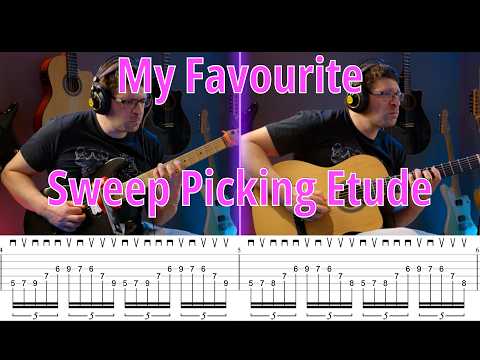
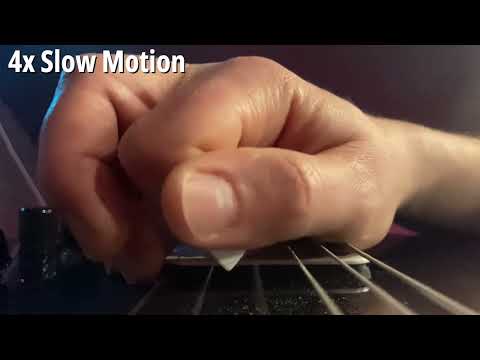
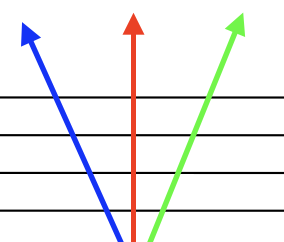
Micro-lesson:

5 Likes

Cracking playing, Tommo! How do you get the descending sweeps so even sounding? Is there something that makes this easier? I find ascending easier than descending. Are you thinking in chunks of 5 notes, focussing on the first note of each beat and letting the rest of the pattern sort itself out?

1 Like

Great question! To be honest I have not fully analyzed my technique in this particular recording.

However I have a working theory that the most important thing is to have a fairly consistent pick attack on the strings you are sweeping. I.e., each string should feel like it opposes approximately the same resistance to the pick’s motion.

This can be achieved in a variety of ways depending on the technique, motion, etc. The other day I was playing around with shoulder (!) motion among other things, since I saw Batio using it during the sweeps.

It’s been a while since I watched Troy’s series on Gambale Sweeping, but I’m sure that will contain good info on this exact problem:

Yep I think so! In order to match the classical and electric performances I had to record to a click. I think my strongest reference point was the highest note of the pattern (every 10 notes). But I also feel the ascending and descending porstions as separate, so it’s likely I’m chunking as 5s.