How would you pick this? SWEET HOME ALABAMA

I think this is a perfect explanation of why classical music pedagogy doesn’t apply to plucked instruments :slight_smile:

Furthermore I don’t believe start slow and gradually increase speed is optimal even for non-plucked instruments. My fingerpicking technique (for fast playing), for instance, has not improved by starting slowly, but by trying to play fast and correcting my hand position etc. to enable faster playing

3 Likes

Do you not think it has informed your playing? Playing slow? Playing fast is a way to go, what is the best way?

@kgk I think you’d enjoy the interview here with Dr. Noa and his discussion on the exploration needed for development of desired technique through a fun story of his mentor coming to him with “how did you play that part so cleanly and loud.”

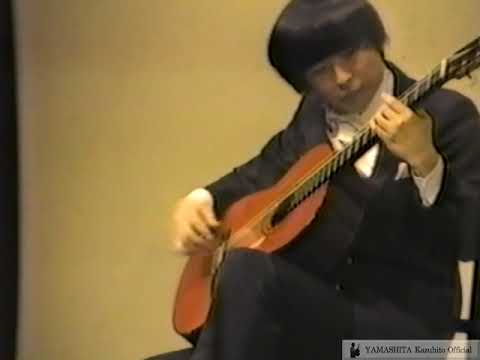
In that same vein, here is incredible classical guitar playing using incredibly unconventional postures but what a sound and such speed:

2 Likes

You didn’t answer specific questions — they are numbered.

I mean, experimenting with the full plant for both ascending and descending arpeggios has helped. For that I started slowly, but immediately tried to play as fast as I could, once the I had the basic mechanics down.

I would say trying to play fast immediately, and correcting posture, experimenting with full plant/not full plant (for arpeggios), tapping quickly on the table with the fingers and trying to recreate that motion on the guitar, changing the angle of my arm, changing the angle of my hand etc., to make it happen has helped the most.

2 Likes

Because I didn’t answer each question individually, number by number?

I’m sorry, I can’t really see any way this is an actual attempt to have a good-faith discussion, on your part, anymore.

6 Likes

I don’t disagree with your premise, but will point out an exception that you’ve overlooked: mandolin. While we tend to think of it as a bluegrass instrument these days, at least in the US, it is first and foremost a picked classical instrument out of Italy known for fast picking, especially tremolo picking. I haven’t looked into the classical pedagogy for mandolin, but there may be something of interest there for anyone who cares to take a look.

————

Starting slowly isn’t about improving technique so much as learning a piece of music without making mistakes so that you learn it quicker and without having to overcome any muscle memory associated with the mistakes. In order to speed it up from there, you’d have to have the correct techniques used (USX, DSX, sweep, whatever) and work them up. If you weren’t using the correct technique for the faster speed while learning at the slower speed, it can’t be worked up to tempo.

1 Like

Can you explain why it can’t? Troy explains in the Warp 3 video that fast technique won’t appear until you go above a certain speed threshold. Andy Wood used DBX at the medium speed and clicks into DSX at high speed and an even more optimised DSX at higher speeds. All of these techniques are different but appropriate for the target speed and are all correct despite having different speed capabilities.

1 Like

Sorry, that wasn’t clear. I meant that if you were using a DSX technique at speed, but a string hopping technique while practicing at a slower tempo, the string hopping technique can’t be sped up beyond ~120 or 130 BPM, not that the passage itself couldn’t be sped up by using the proper technique(s) for the required speed (and fingering). Hopefully that’s clearer.

That is the tricky part that does not always translate linearly and goes south quite frequently in the context of guitar picking.

The example that always comes to mind is the difference between walking and sprinting. Sure, you can slo mo your sprinting motion for a minute to better understand what’s going on or exaggerate a specific element but if you want to improve your running, there’s only one thing that will get you there: running.

Moreover, even when working on speed techniques, there is the concept of “practicing fast but slow”, which means that the time between a downstroke and an upstroke can take longer (or every down-up cycle), but the pickstrokes themselves have to be done fast anyway.

1 Like

Wait, aren’t there parts of the sprinting gait where both feet are off the ground? In that case you can’t! :joy:

Exactly LOL!

Trying to replicate a fast motion slowly involves so many variables and you will most certainly be missing something anyway.

Speak for yourself!

(starts levitating in the air, ominously)

2 Likes

Huh that’s interesting - never knew that, actually. I suppose it makes sense, though, the guitar was technically a classical instrument at some point too, and a mandolin is basically (maybe exactly? I know it’s the same intervals but not sure on pitches) a violin with frets.

I’ve been thinking about the slow vs fast thing lately and one of the areas where I do think “slow” practice can have value is building your “touch” on the guitar. I’ve been playing more acoustic lately, and on one hand doing a lot of fast picked playing… but also noticing that my touch on the acoustic just isn’t that great, and there could be a lot of things in play here but one thing that DOES seem to be helping is intentionally playing slower melodic lines, with a focus on ultra-clean execution and carefully controlling my articulation, to make sure notes are sounding out cleanly and exactly the way I want them to.

2 Likes

Drew, I have to thank you for your detailed and patient responses…you’ve really broken a lot of the core CTC observations down to a basic level that anyone who ISN’T overly familiar with the origin and intent of what this site does can understand.

My little response to the original question probably wasn’t clear enough on my part. I was trying to say that discussion about how to play a piece that one studies on electric guitar are best answered by the player that executed (and often wrote) the piece, mostly given the availability of video, photos, interviews and all manner of evidence that the Internet affords us.

I was trying to say perhaps too literally, “what if” scenarios can be a fun rabbit hole for an individual or like-minded people to run down…maybe there’s a creative reward for such fantastical thinking.

For me personally, I’m totally uninterested in worrying about how to play “Sweet Home Alabama” at Michael Angel Batio speeds using strict gypsy-jazz technique and nailing down what the exact picking directions and pick slants would be empirically best for such a scenario. I do think that there is enough information in CTC courses that one perhaps COULD map out an answer or answers to a fantasy like this. Maybe there is indeed a reward to be found there. That sort of outside of the box thinking can lead to fresh takes on old material…almost like J. Dilla’s incredibly creative use of samplers and micro-time feel to slice and dice music into amazing and never before considered end products.

Yet…call me crazy, but I believe Ed King was and remains the undisputed master of how to best play “Sweet Home Alabama” as it was originally written and played by him! :crazy_face: At least initially…I just think that it MIGHT be a good idea to learn how the piece was originally played before it goes all ‘Quantum Leap’ :joy:

2 Likes

Hey thanks! I’ll only say that I can only speak to CtC through my experience and understanding, so we can’t rule out the possibility that I’m misunderstanding something or getting something wrong myself! But, I certainly try.

I think “what if” scenarios can both be fun, and pose some interesting questions and challenges that might promote some new breakthoughs or growth on our parts. And, since the nature of a discussion forum is a bunch of people basically spitballing new ideas, they’re perfect material for this format.

I guess I see the value in exactly following the lead of the artist who wrote a part, to a point, though I still have that general leeriness about being too dogmatic about anything and think there’s value in being open to alternate answers…

…but I do think that it’s also a matter of understanding that there are different objectives you can optimize around, and maybe a gypsy jazz approach might lend itself to a blistering-fast run throguh of the song (it might not, I’d have to sit down and feel it out, but let’s say for the sake of discussion it might), but some other approach might “optimize” differently for tone or groove or dynamics or feel, and something about capturing the overall vibe of the part might suffer with a more “efficient” approach. And there’s value in that too, I think.

2 Likes

Agreed…I’m pretty dogmatic about following what the artist does above all else and THEN I might look at other options and approaches once I have a strong foothold in the original recording and the original artist. I recommend that to my students, but I will never deny that other approaches can and do take one to another place, and that place is generally Ok by me! :+1:t2:

1 Like